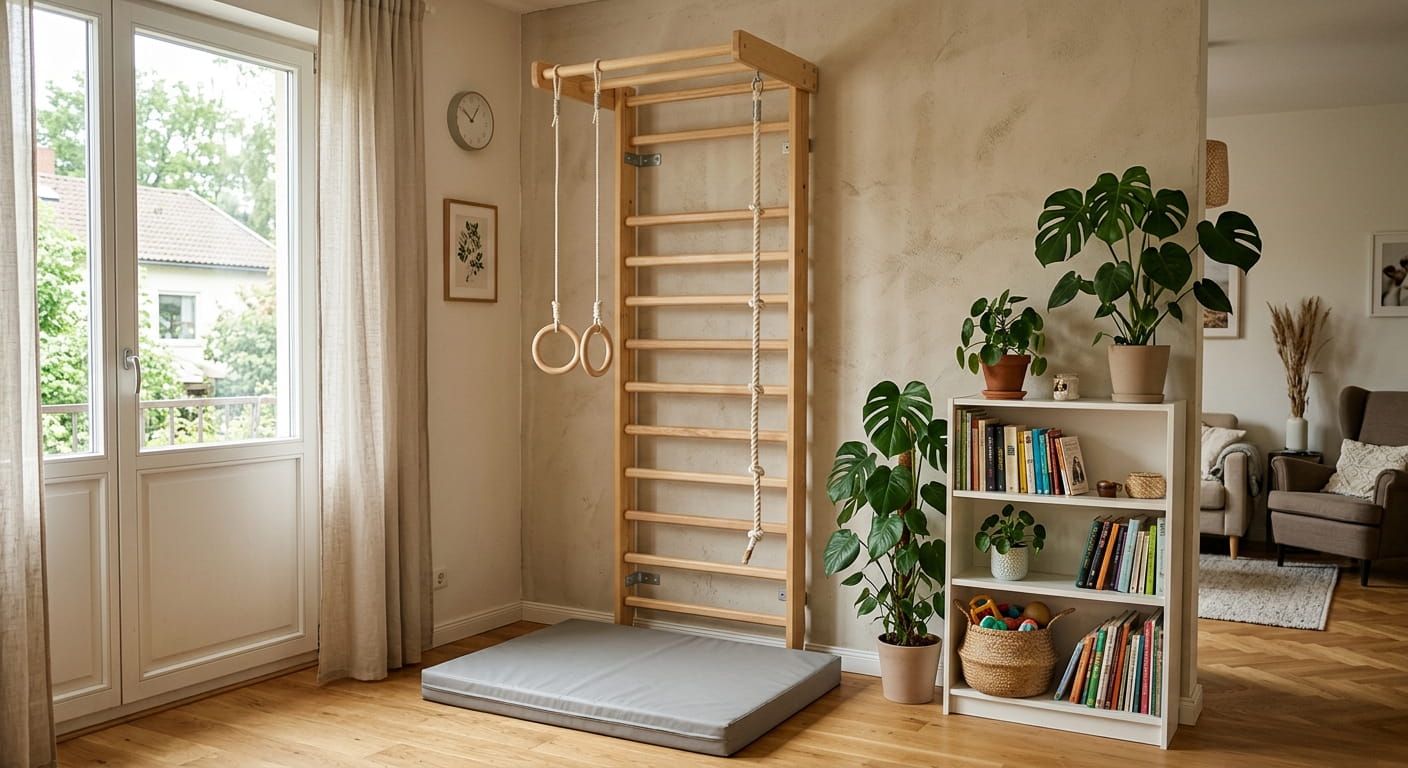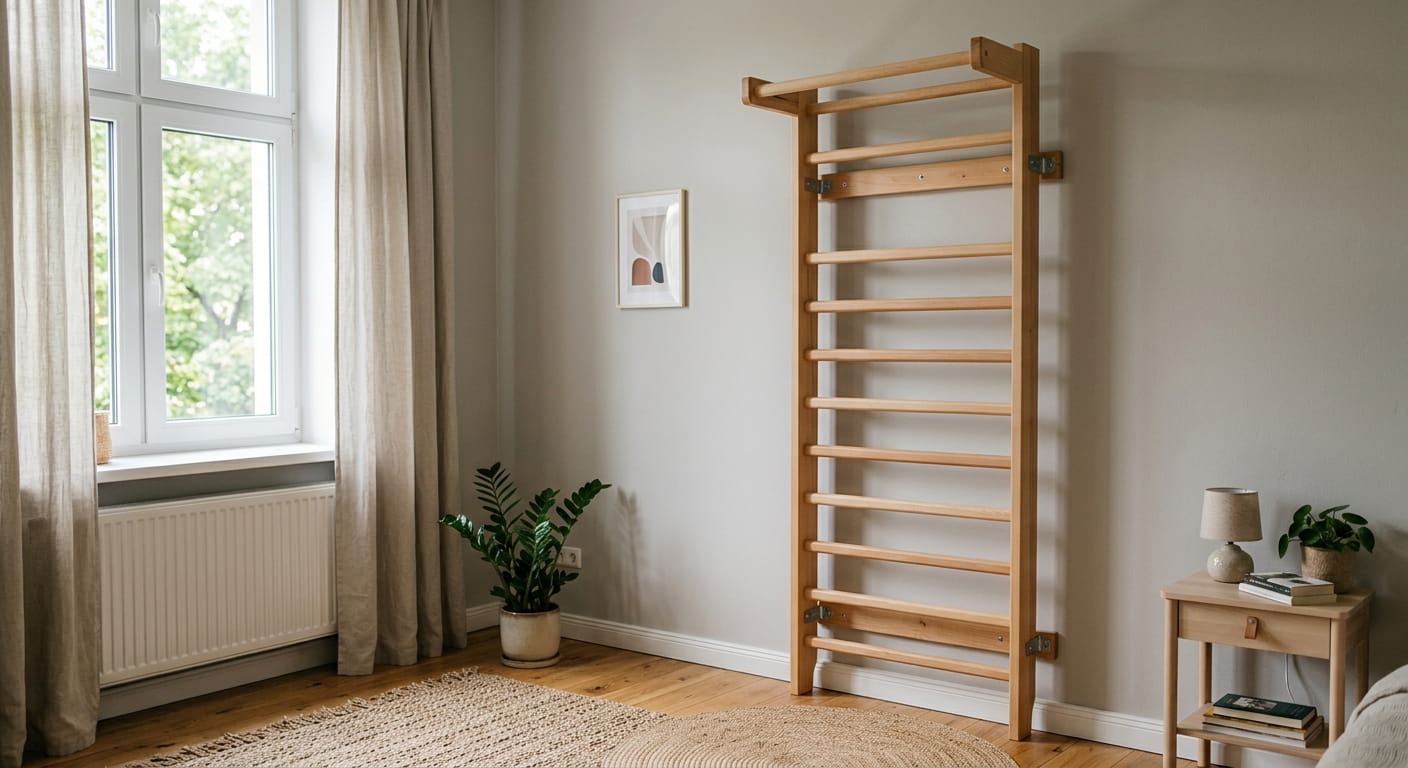
A coach at a children's club does not install wall bars for decoration: without them there is simply nothing for splits stretching or for unloading the back after a session. Gymnastic wall bars are a working piece of apparatus for therapeutic exercise, posture and stretching — made of beech and ash, rated up to 250 kg. Below you will find rung spacing, the "Lider" and "Atlet" models for gyms, attachments, mounting, rehabilitation and child development, the difference between a home unit and one for institutions, care and wholesale terms.
Let's start with the obvious point that is often overlooked: the very same structure covers completely different tasks depending on who approaches it and why. A child at a gymnastics club uses the rungs for stretching and warming up before going onto the mat. An adult after a sedentary workday uses them for hanging and decompressing the lower back. A patient in rehabilitation uses them for a measured load under a specialist's supervision. Each of these scenarios has its own dedicated block below, with specifics rather than generalities.
Gymnastic wall bars: a place in the gym, the club and the flat
In any rhythmic or artistic gymnastics club the wall bars are not there just for show. People warm up the back before splits stretching, hang upside down to decompress the spine after work on the trampoline or beam, and hold their balance while drilling sequences at the ballet barre. In a school gym the same structure covers the entire PE lesson: pull-ups, bends, ab exercises and hanging to relieve compression after running. At home the function is the same, just on a smaller scale — stretching before a workout, easing the back after a day at the desk, correcting a schoolchild's posture.
It is worth a word on how buyers phrase their searches. Some look for "gymnastic bars", some for "wall bars for gymnastics", and others write "gymnastics stall bars" — in fact it is one and the same apparatus, just with different word order. Structurally there is no difference from ordinary wall bars: the same uprights, the same rungs at a fixed spacing, the same mounting principle. The difference is in purpose and sometimes in the choice of attachments — for gymnastics people more often add rings, a rope and a stretching bar rather than a wide-grip pull-up bar for heavy pulling.
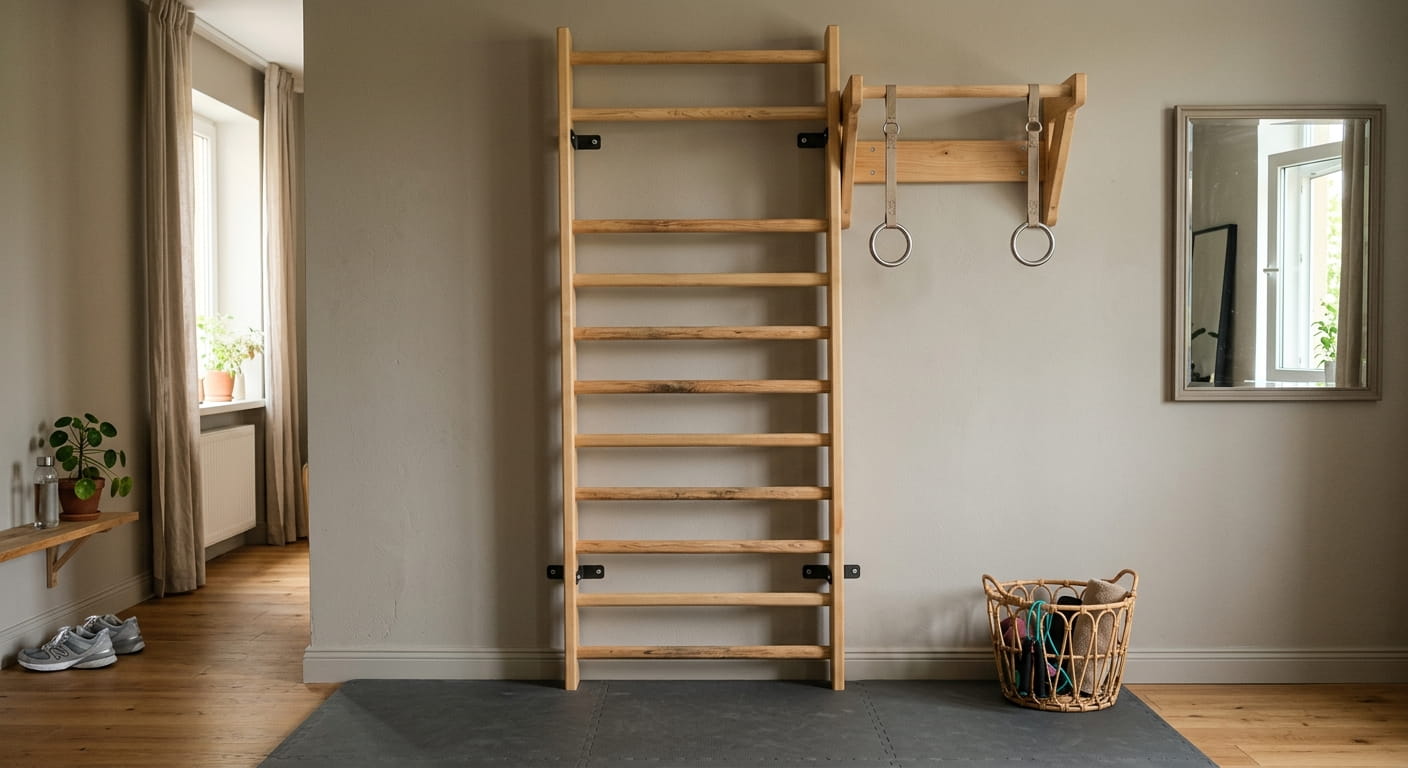
Here is what regular work on such wall bars gives you, stated point by point and without embellishment:
Posture
Hanging and stretching on the rungs decompress the spine and release tension after sedentary work or study.
Flexibility
The fixed rung spacing is convenient for stretching at different heights — from ankle to hip.
Safety
Concealed fasteners, rounded rungs and a stable base reduce the risk of injury during training.
For clubs
Models with a reinforced frame handle a flow of children and adults without losing rigidity over a season.
There is a nuance that is often forgotten at the choosing stage: gymnastic wall bars rarely work alone. In a club gym there is almost always an ab bench nearby, a rope or rings fixed somewhere, sometimes monkey bars added for grip training. At home the logic is the same — a basic structure plus one or two attachments for a particular person's tasks: rings and a rope ladder for a child, a pull-up bar and dip bars for an adult, plain rungs without strength attachments for an elderly relative doing therapeutic exercise.
Rung spacing and other standards
Rung spacing is not an aesthetic decision but a calculated value. Spacing that is too tight makes the structure heavy and makes it hard to place the foot while climbing; spacing that is too wide is awkward for children and shorter people. At the production site in Zaslavl the spacing is chosen for universal use: for an adult gymnast, a school-age child and a person in rehabilitation after injury, when the step must be fine and predictable.
| Parameter | Value | Comment |
|---|---|---|
| Wall-section width (entry-level models) | from 65 cm | fits narrow wall sections in a flat |
| Ceiling height for pressure mounting | 2.40–3.10 m | no stretch or suspended ceilings |
| Floor area taken up | about 0.2 sq m | the real footprint of the uprights |
| Standard load | 120–150 kg | for entry-level models |
| Reinforced load | up to 250 kg | "Atlet" model, thick uprights |
| Assembly time | 1.5–3 hours | instructions and fasteners included |
| Warranty | 12 months | on the structure and attachments |
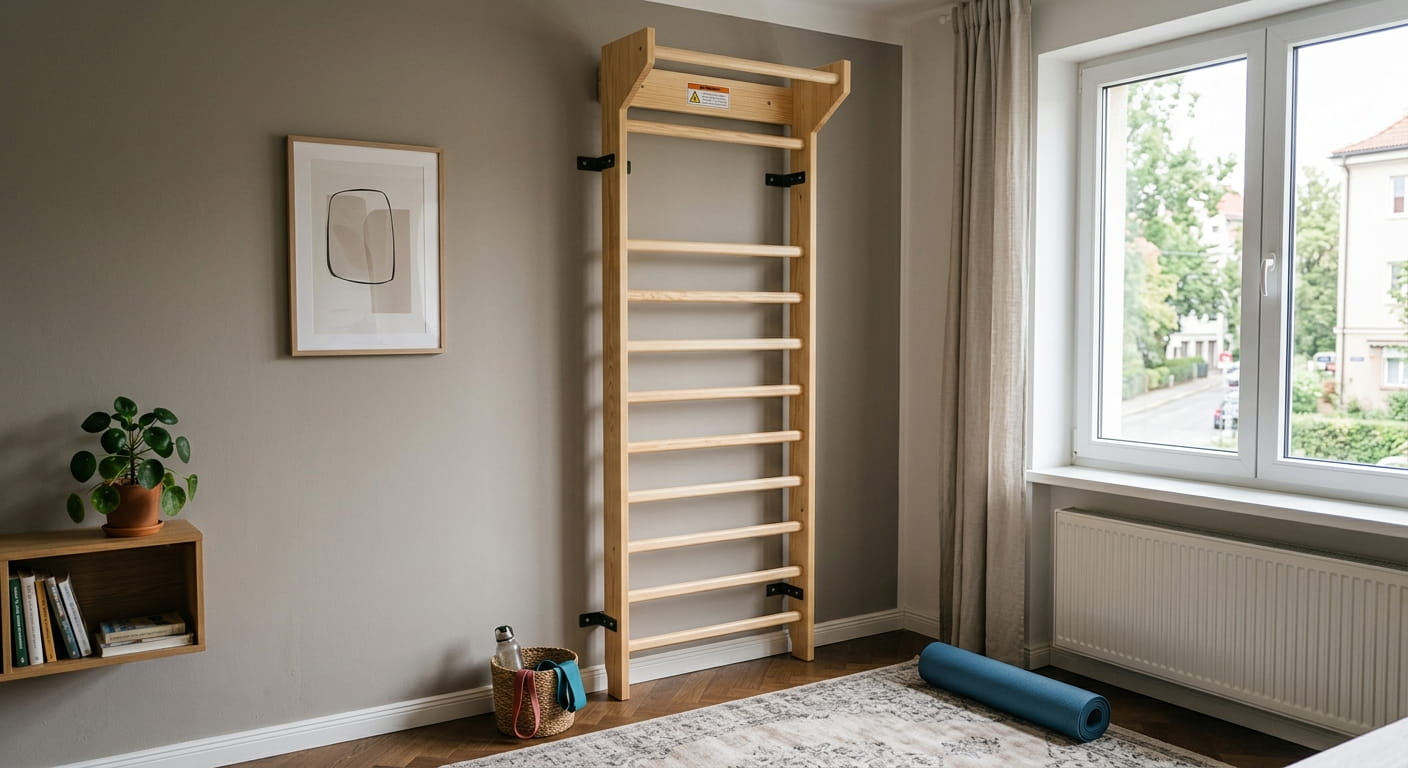
A separate question is the height of the wall bars themselves. In flats with 2.5 m ceilings we are talking about a full-height structure running from floor almost to ceiling, which gives the maximum number of rungs for stretching in different planes. In club gyms with higher ceilings, models with an upper pull-up bar set above the main section are often installed — this is no longer about saving floor area but about extra hanging height for adult athletes.
If the room is a rented flat or a space with thin partitions, pressure mounting is installed only with a ceiling in the stated range and only if the ceiling is structural. A pressure-mounted unit must never be fitted to a stretch or suspended ceiling — the structure is not designed for such a load and will damage the membrane.
There is one more parameter that catalogues rarely list but that matters precisely for gymnastics — the angle and depth of the rung grip. A round section fitting the palm of an adult and a child at once is physically impossible, so the production team picks the rung section as a compromise: thick enough not to cut into the palm during long hangs, and narrow enough for a child to wrap their fingers fully around it rather than only partly. For comparison, an outdoor pull-up bar is often made of thick tube convenient for an adult grip but awkward for a child's hand — one of the differences between a street bar and home wall bars designed for several ages at once.
Another nuance concerns the number of rungs per section. The more there are, the higher the model's price, but also the wider the range of heights for stretching without having to move the feet up several steps at once. For an above-average-height adult the extra lower rungs are almost never used, whereas for a child or a shorter person it is precisely the lower rungs that are the working ones most often — stretching and warm-ups rarely require climbing above chest level.
What the uprights and rungs are made of
Material is essentially half the conversation about an apparatus's reliability. The uprights of gymnastic wall bars are made of glued timber — pine or birch. Gluing several lamellas instead of using solid wood gives stability: glued timber moves less with changes in humidity and temperature, so the upright will not dry out or crack after a couple of heating seasons. Glued timber is simply unsuitable for rungs — there you need a dense, hard wood able to take the point load from the grip of hands and the push of feet. That is why the rungs are made of beech or ash.
Why this particular wood matters for gymnastic wall bars
Beech and ash were not chosen by chance. Both species have a high fibre density, so the rung does not slip under a wet palm the way a pine blank would, and does not chip into splinters under intensive use. In a club where two dozen children's hands pass over a single rung in one session, this is significant — a rung of soft wood wears smooth and cracks noticeably faster.
| Element | Material | Why this one |
|---|---|---|
| Uprights | glued pine or birch timber | resistance to drying out, even geometry |
| Rungs | beech or ash | dense, hard wood that does not slip or chip |
| Coating | water-based lacquers and oils | hypoallergenic, no harsh smell, certified |
| Fasteners | concealed metal, furniture ties | do not hurt the palm, do not work loose from vibration |
The coating is a separate topic that buyers often skip, and wrongly so. Untreated wood quickly absorbs sweat and moisture, darkens and starts to feel rough. At the production site the uprights and rungs are coated with water-based lacquers or oils — hypoallergenic and certified, with no volatile solvents or the harsh smell of fresh varnish. This is critical for children's clubs and for the home, where a child is most often the one next to the gymnastic wall bars.
Fasteners also affect how a workout feels, although they are almost invisible. Concealed metal fasteners and furniture ties assemble the structure from the inside, with no protruding bolt heads on the working surface of a rung or upright. The hand slides over the wood without catching on metal, while the assembly stays rigid — the ties stop the uprights from playing under active use.
Assembling the apparatus takes between an hour and a half and three hours depending on the model — the "Krepysh" or "Vertikal" go together faster thanks to their simple I-shaped geometry, while the sectional "Lider" with monkey bars and a net takes longer simply because of the number of parts. The instructions and all fasteners are already included, and there is no need to buy screws or plugs separately — the only exception is a non-standard wall requiring a special anchor, which is clarified in advance during the site survey.
Models for gyms and clubs: "Lider", "Atlet" and others
When the wall bars are needed not for a single flat but for a group of people — a club, a school gym, a rehabilitation room — the choice of model changes. Compactness takes a back seat to frame strength and the range of attachments. From the maker's line-up, the "Lider" and "Atlet" are most often chosen for such tasks, though the final choice depends on budget and room layout.
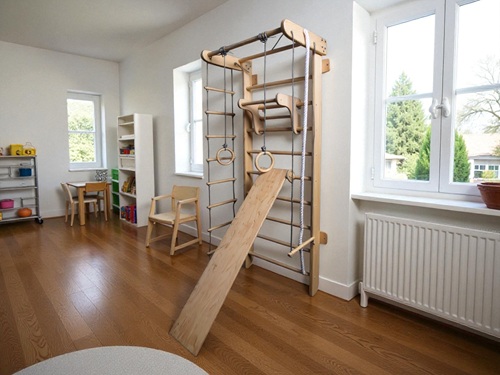
The "Lider" is a U- or T-shaped structure with several sections, a built-in climbing net and monkey bars. The format suits group use precisely: while one child practises hanging on the rungs, another climbs the net at the same time and a third crosses the monkey bars. For a gymnastics club or general physical training such versatility pays off — the apparatus covers several training stations on a single footprint.
The "Atlet" follows the opposite logic: not width but strength. Thick uprights, a reinforced assembly and a load rating up to 250 kg make this model the mainstay for adult groups and gyms with heavy traffic. Dip bars and a bench usually come with it, which fully covers the strength block of a workout — from pull-ups on the rungs to dips on the bars and crunches on the bench.
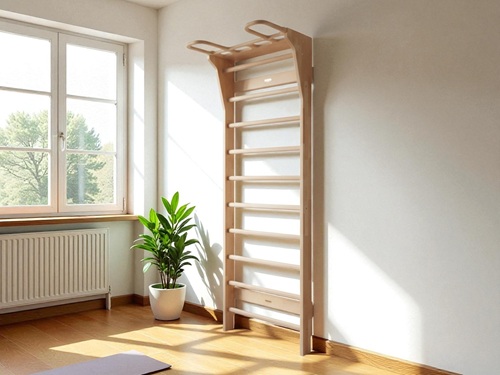
The other models in the line-up also work in gyms, but each covers a narrower task. The "Krepysh" is a basic I-shaped structure for narrow wall sections, suited where compactness comes first rather than group load. The "Vershina", with a built-in upper pull-up bar, raises the hanging point above the standard, which is handy for taller adult athletes. The "Vertikal" relies on rigid combined mounting and suits rooms where maximum stability without compromise matters. The "Minsk Sport" is a modular system with removable adjustable attachments, convenient where the group composition changes and the apparatus needs quick reconfiguring for different tasks. The "Moy Turnik" is built around the upper body — a removable pull-up bar with various grips for practising pull-ups. The "Maugli" is a children's line with a rope, rings and a rope ladder, for the youngest group or a home corner.
| Model | Structure | Load | Price from, $ |
|---|---|---|---|
| Krepysh | I-shaped, narrow wall sections | 120–150 kg | from 198 |
| Vershina | I-shaped, upper pull-up bar | 120–150 kg | from 187 |
| Vertikal | I-shaped, rigid combined mounting | 120–150 kg | from 183 |
| Atlet | reinforced, thick uprights, dip bars and bench | up to 250 kg | from 202 |
| Minsk Sport | modular, removable adjustable attachments | 120–150 kg | from 174 |
| Lider | U/T-shaped, sections, net, monkey bars | 120–150 kg | from 195 |
| Moy Turnik | removable pull-up bar with various grips | 120–150 kg | from 218 |
| Maugli | children's, rope, rings, rope ladder | by age | from 92 |
If the goal is not only gymnastics but a full home gym with a strength block, it makes sense to look straight at the sport wall bars set with a pull-up bar and extra attachments — a separate category on the site with a wider range of accessories. And for those who want to cover the whole workout — from hanging to dips on the bars — there is a dedicated line of wall-bars exercise machines, where the emphasis is on functionality rather than compactness alone.
At this stage the price question is almost always settled pragmatically: the difference between the "Krepysh" at from $198 and the "Atlet" at from $202 is symbolic, yet the "Atlet" offers a far greater safety margin and comes with dip bars and a bench straight away. Paying extra for a load up to 250 kg instead of 120–150 kg looks logical if the apparatus goes not into a bedroom for one person but into a shared room where both adults and teenagers will train. Saving on the model is only meaningful in one scenario — when the wall bars are for a younger child, and then it is more sensible to take the "Maugli" at from $92, designed precisely for a child's weight and movement mechanics, rather than buying an adult structure to grow into.
The "Minsk Sport" deserves a separate mention — a model often underrated alongside the better-known "Lider" and "Atlet". Its modularity and removable adjustable attachments make it convenient precisely for clubs with a changing group composition: younger schoolchildren train today, teenagers tomorrow, and the attachments can be reconfigured to a specific group's height and tasks in a few minutes, without buying a second unit.
Attachments: pull-up bar, dip bars, bench, mats
The frame with rungs on its own covers basic stretching and hanging, but most buyers add attachments — they expand the workout without replacing the whole structure. A removable pull-up bar fits on the top section and comes off when you need to free up space for unobstructed stretching. Add-on dip bars fix to the side and work the strength block — dips, supports, leg raises. A folding ab bench tucks flat against the wall bars when not in use and takes up no extra room in a small space.
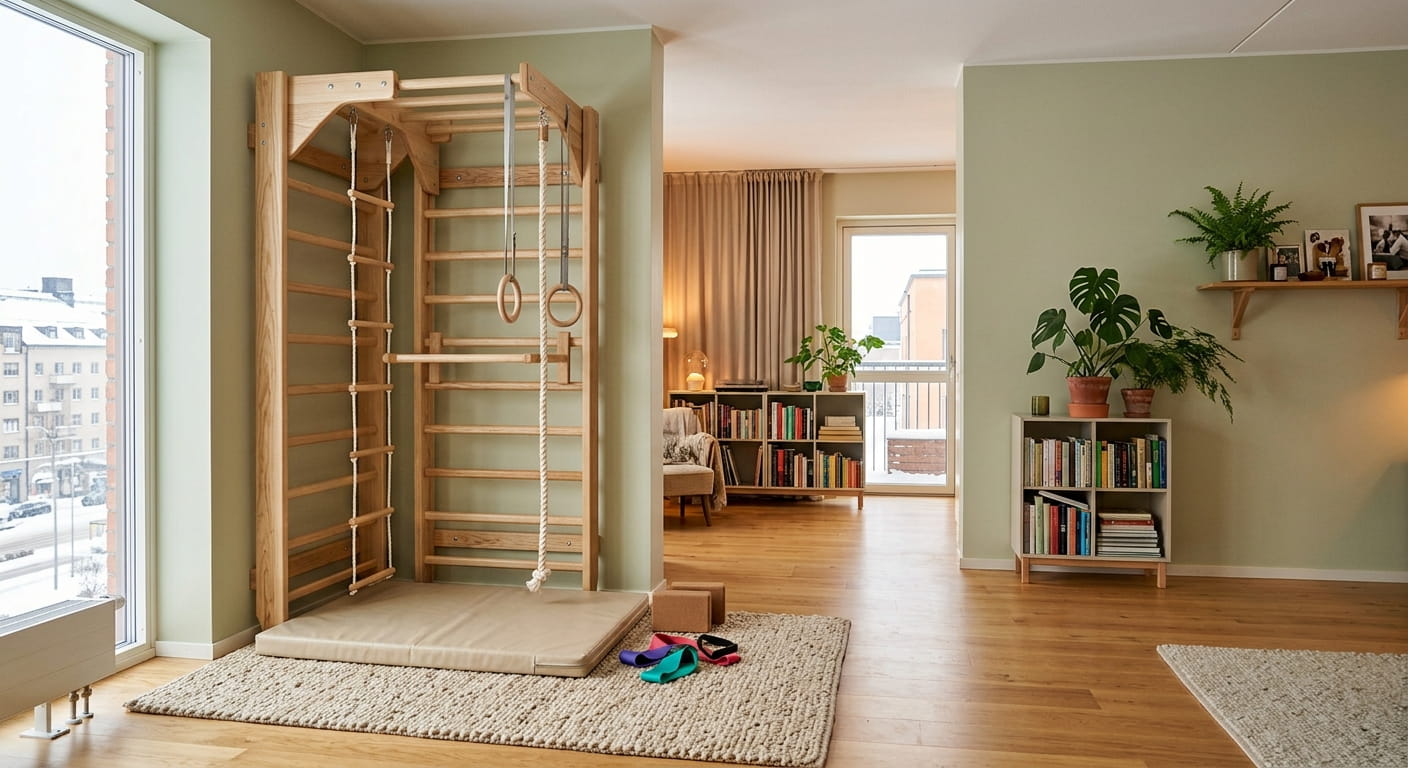
For gymnastics, the rings and the rope deserve special attention — classic apparatus for developing grip and coordination, rarely found on all-purpose power racks but a natural fit for gymnastic wall bars. A rope ladder adds another way to load the arms and core, while resistance bands cover the warm-up before the main block of exercises.
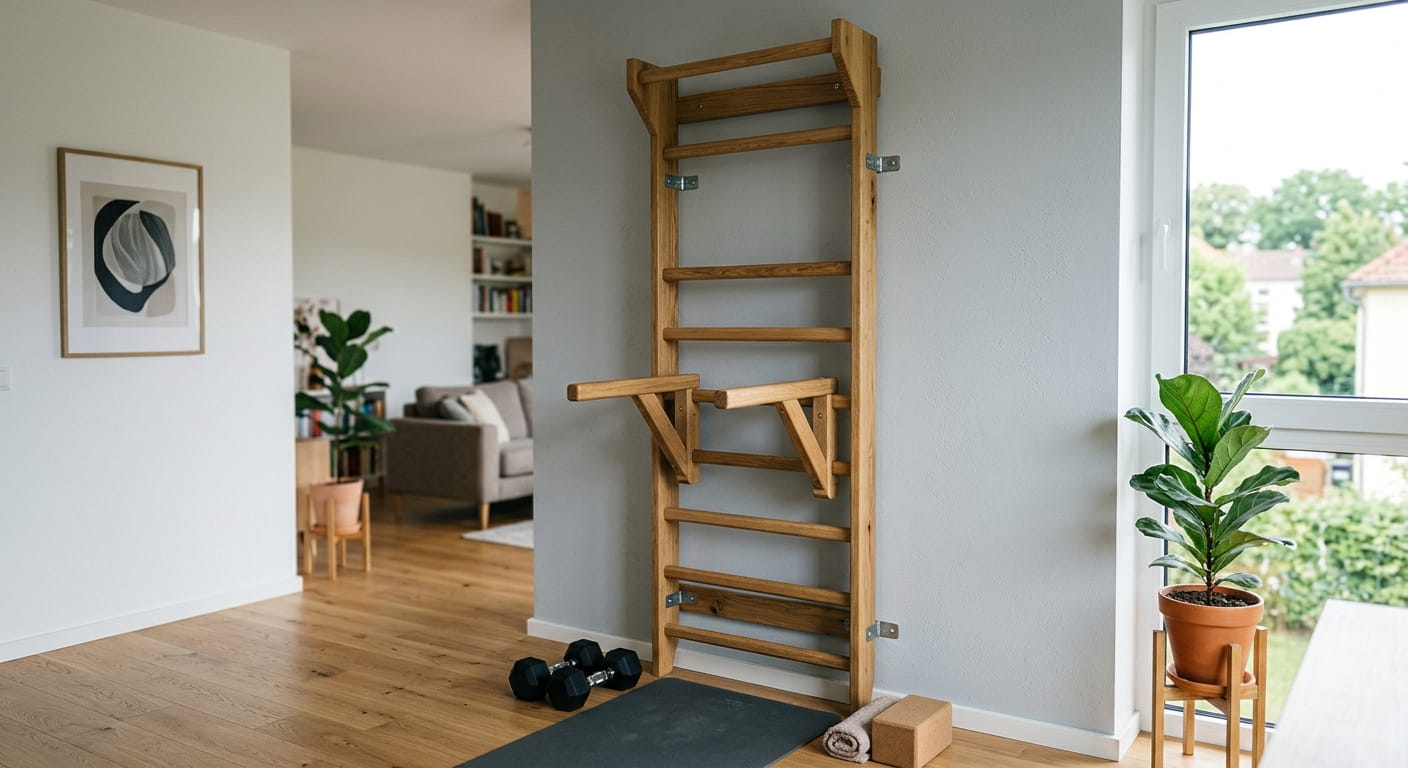
A set with a pull-up bar and dip bars is usually considered separately when the plan is a full strength workout rather than just stretching and therapeutic exercise. The site has a dedicated page on wall bars with a pull-up bar and dip bars, where the configuration options for exactly this request are laid out.
Mats deserve a word of their own, because they are often underrated at the purchase stage. A mat under the wall bars is not a box-ticking option but a mandatory safety element when working with children and when practising moves where a fall or dismount from a rung is possible. The thickness and density of the mat are matched to the task: a thin mat is enough for stretching and warm-ups, while gymnastic moves from height need a dense mat that absorbs the impact of a fall rather than bottoming out.
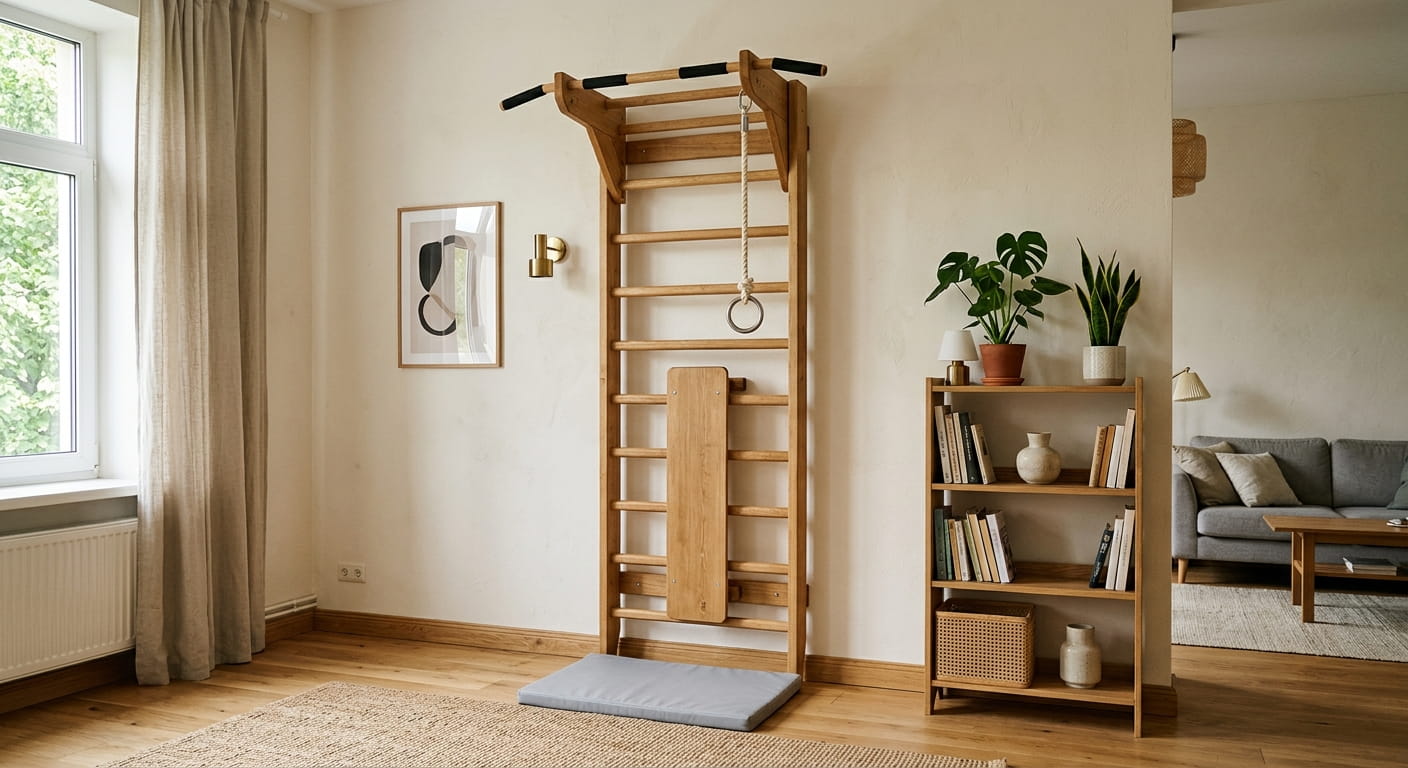
One more point to understand: the attachments are covered by the same 12-month warranty as the frame itself, except for the natural wear of rope and textile elements — the rope, the rope ladder and the ring loops stretch over time with active use, and this is a normal part of operation rather than a manufacturing defect.
Load and mounting in a sports gym
The standard load of entry-level models is 120–150 kg, which is enough for the vast majority of adult users and children. If the wall bars go into a club gym with a flow of different people during the day, it makes sense to look straight at the reinforced "Atlet" model rated up to 250 kg — thick uprights and a reinforced assembly withstand more active and frequent use without the risk of working loose over time.
The floor area taken up by gymnastic wall bars is about 0.2 sq m. That is less than a stool, so the structure can realistically be placed even in a narrow wall section between a window and a door, without sacrificing usable space in a room or gym.
Mounting is a question settled at the room-survey stage, not after delivery. There are two main options. Wall-fixed anchor mounting is the most rigid possible and suits concrete and solid-brick walls. It is the default choice for a sports gym, a school, a club — anywhere the load is constant and intensive and the wall is structural. Anchor mounting must never go on plasterboard: the sheet simply will not hold the point load of hanging and pull-ups, however good the fasteners are.
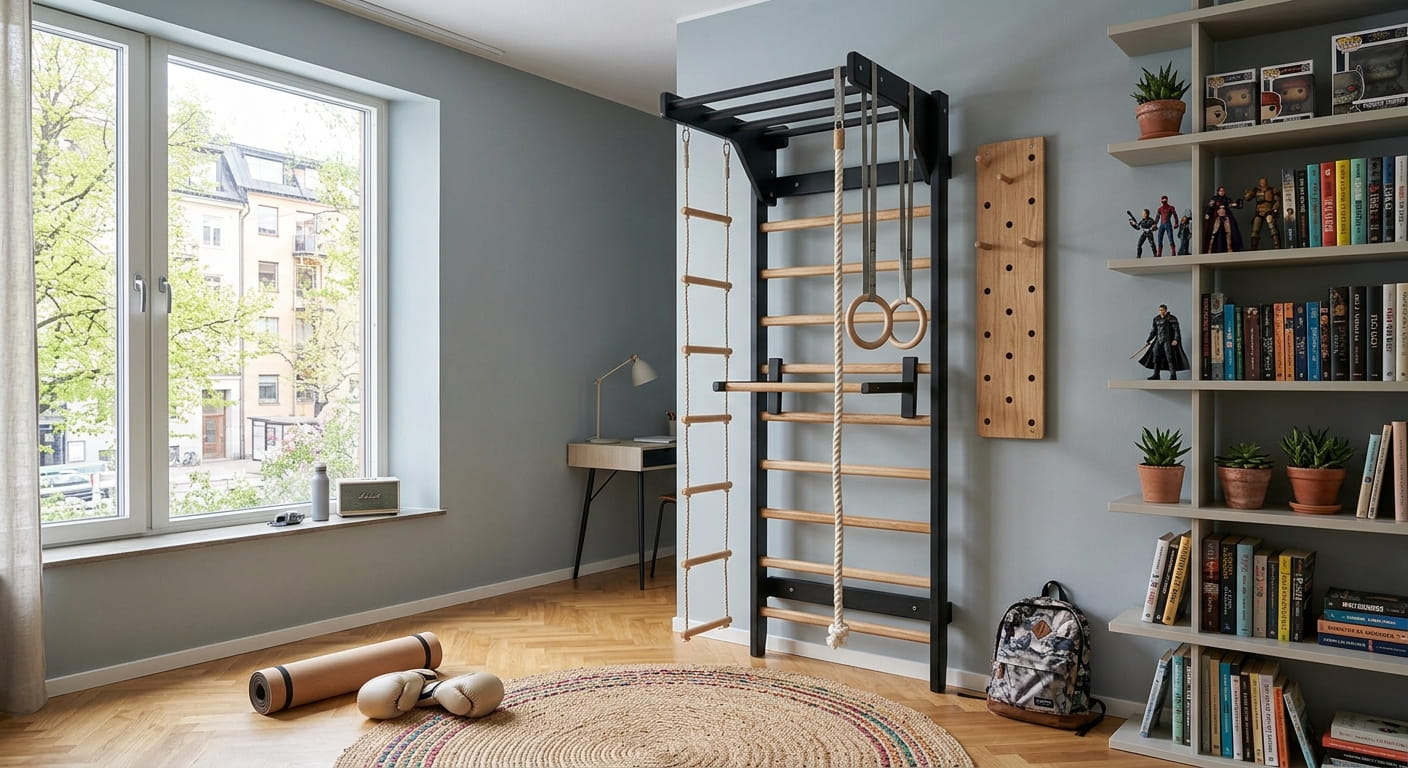
The second option is pressure mounting — floor-to-ceiling, screw-adjusted, with no drilling into the wall. This option suits rented homes and thin partitions but requires a specific ceiling height — from 2.40 to 3.10 m — and a structural slab without fail. A pressure-mounted unit must not go on a stretch or suspended ceiling — it is not designed for such a ceiling type and can damage it. Top models, including the "Atlet", use combined mounting — a blend of wall-fixed and pressure mounting that gives maximum rigidity even under active group use.
For a gym or club there is one more point that matters: the distance between several units if they are placed side by side. You need to leave enough room for people training at once not to catch each other during stretching or swinging movements — and that is a matter of room layout rather than the apparatus itself.
Therapeutic exercise, rehabilitation and child development
Gymnastic wall bars in children's groups and rehabilitation
In rehabilitation and physiotherapy rooms the wall bars are one of the basic pieces of apparatus, without which it is hard to build a recovery programme after back injuries, joint surgery or prolonged bed rest. Hanging removes axial load from the spine, while the fixed rung spacing lets you dose the range of motion — from minimal, for the first weeks of rehabilitation, to full, as the patient recovers.
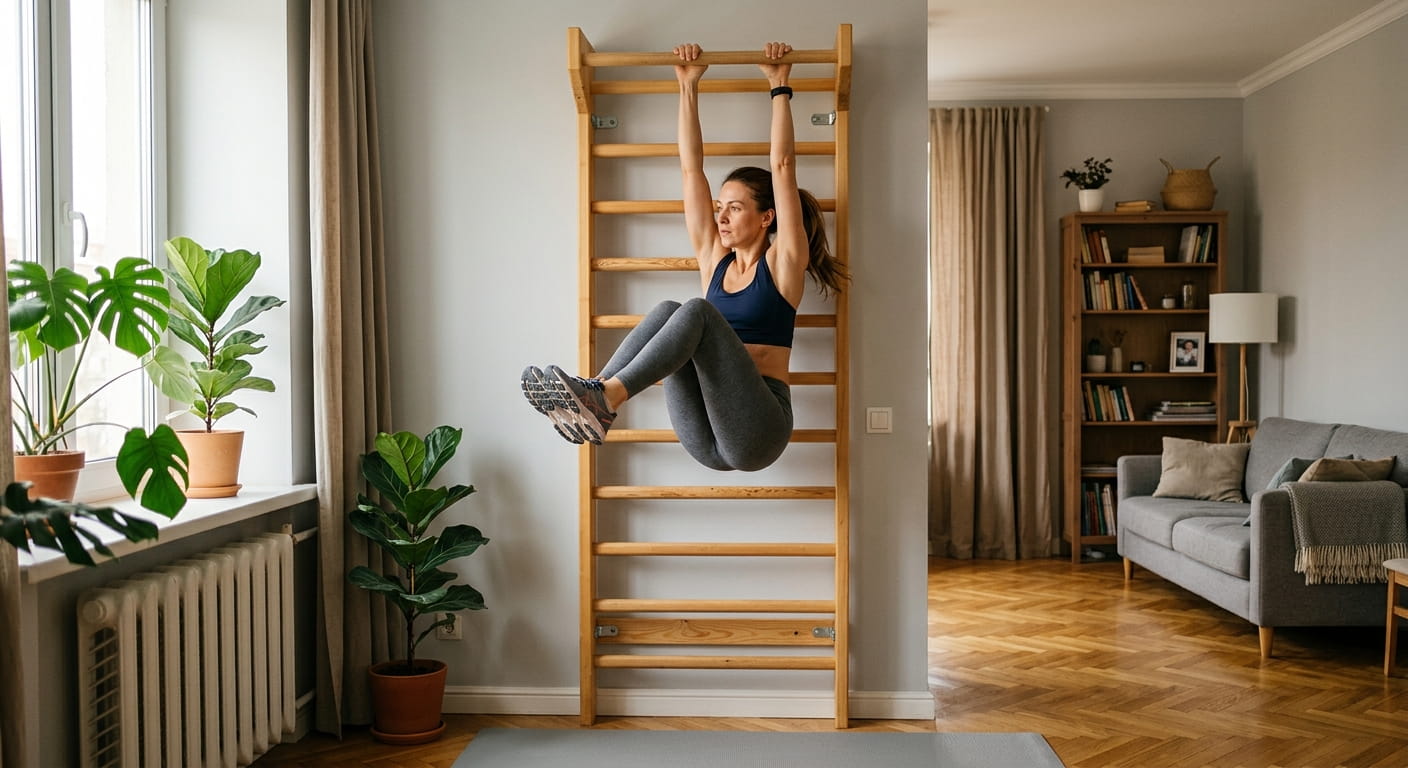
For children the task is different, but the apparatus is the same. In preschool and school age the gymnastic wall bars work on posture and coordination — the body is still forming, and regular hanging with stretching helps hold the back in the correct position, especially for children who sit a lot at a desk or computer. In artistic and rhythmic gymnastics clubs the wall bars are the base for splits stretching, warming up before going onto the mat or beam, and practising balance at the barre.

For the youngest users the site has a dedicated category — wall bars for kids, where models are selected with the child's age and height in mind, including the younger "Maugli" line with a rope, rings and a rope ladder instead of strength attachments.
A separate point is the gradual build-up of load. Neither a child nor an adult in rehabilitation should be given the maximum range or weight at once. This is exactly where the fixed rung spacing helps: the instructor or parent simply picks the required grip or support height without readjusting the apparatus each time, as they would with an adjustable machine of another type.
In practice, parents most often ask not about the benefit itself — that is obvious — but about safety specifically for their child. A simple rule applies here: a younger schoolchild trains only under the supervision of an adult or coach, a mat under the wall bars is mandatory, and the height a child may climb to without a spotter is limited by their height — no higher than the level from which they can jump down without risking a twisted ankle. As the child grows and coordination develops, the range widens on its own, and there is no point in rushing the process.
For adults in rehabilitation the logic is the reverse — not limiting the range but gradually increasing it according to the programme of a doctor or physiotherapist. The gymnastic wall bars then serve as a measuring and training tool at once: a specific rung becomes a marker of progress — today the patient reaches the third from the bottom, in a month the fifth — and that is a clear indicator of restored mobility without complex equipment or sensors.
Home unit or institutional one: how they differ
The difference between a home unit and an institutional one lies not in design but in the rated intensity of use. A home model is designed for one family — say, a handful of people who use the apparatus a few times a week. For an institution — a kindergarten, school, club, rehabilitation centre — the same apparatus must withstand dozens of contacts a day from users of different weights and loading patterns, and do so without losing rigidity over several years in a row.
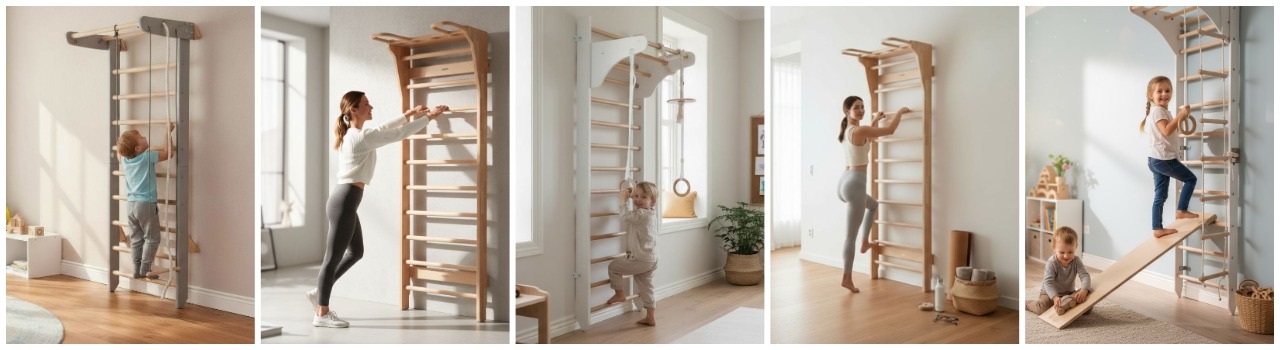
Hence the difference in model choice. For a flat a basic I-shaped structure such as the "Krepysh" or "Vershina" is quite enough — compact, rated at 120–150 kg. For an institution it makes sense to look straight at reinforced versions (the "Atlet") or sectional models with several load points at once (the "Lider"), where several children can train in parallel without forming a queue at a single unit.
The second point of difference is documentation. For institutions — state and private kindergartens, schools, clubs — certificates of conformity are mandatory. The products are certified to the requirements of the technical regulations, which confirms the safety of the materials and structure for use where children and a large flow of users are present. For a private flat a certificate is not formally required by law, but it is in fact the same document confirming that the coating, the adhesives and the fasteners are safe — and it is sensible to ask for it in any case.
The third point is warranty and service terms. For institutions with intensive use the manufacturer recommends checking fastener tightness more often — not every 3–6 months, as for home use, but monthly, because the load on the structure is many times higher. This is a simple procedure, but it must not be skipped if a group of people uses the apparatus every day.
Care and maintenance of gymnastic wall bars
Caring for a wooden structure is simple but regular, and it is precisely the regularity that determines the apparatus's service life. Wood with a water-based coating is wiped with a dry or slightly damp cloth — without aggressive chemicals or abrasives, which rub away the protective layer of lacquer or oil and expose the wood fibres to moisture.
- Wipe with a dry or slightly damp cloth, without abrasive sponges or powders
- Check the tightness of bolts and ties every 3–6 months (more often in gyms)
- Lay a mat under the wall bars to soften falls and protect the floor
- Do not place the structure in direct sunlight or next to radiators
- Watch the condition of the rope and textile attachments — they wear faster than wood
- At the first squeak or play, tighten the fasteners right away rather than putting it off

Direct sunlight and proximity to a radiator are two enemies of wood that are often forgotten once the unit is installed. Ultraviolet gradually fades and dries out the top layer of the coating, while dry hot air from a radiator speeds up the shrinkage of the wood, which can cause play in the joints. If the room layout makes it impossible to avoid these factors entirely, at least do not place the wall bars right against a heat source.
Checking the tightness is a five-minute procedure, but it is precisely what ensures safety in the long run. Over time, vibration during active training can slightly loosen the bolted joints, especially where the rungs attach to the uprights. Once a season it is worth running an open-end wrench over all the visible fastening points — this is prevention, not a sign that something is wrong with the wall bars.
Wholesale, retail and cooperation with the maker
Besides retail sales, the production in Zaslavl works with wholesale buyers — sporting-goods chains, children's centres, franchises of gymnastics and general physical training clubs. The minimum wholesale batch is from 10 units, after which price and terms are discussed individually depending on volume and order regularity.
A separate line is own-brand work, private label: the products are made with the customer's branding, which suits chains that build their own range of sporting goods under their own name. All products come with certificates of conformity — this applies to both retail and wholesale supplies, with no difference in material-safety requirements.
The timelines are clear and transparent. Producing a batch takes 15 to 35 working days depending on order volume and model, and dispatch after completion is 3–5 working days. Delivery to the carrier's terminal is free, which cuts logistics costs for a wholesale buyer from any region. There is also self-collection straight from the warehouse in Zaslavl at Stroitelnaya ulitsa, 7 — for those who are geographically closer or prefer to control logistics themselves.
Retail delivery, meanwhile, covers all of Belarus with no tie to wholesale volumes — you can order a single set of gymnastic wall bars for the home just as easily as a batch for a chain of children's centres, the only difference being production time and logistics. The own workshop in Zaslavl keeps the same quality of materials and assembly regardless of order size — retail and wholesale alike.
If you are torn between several models — say, between a basic "Vertikal" for a flat and a sectional "Lider" for group use — it makes sense to work out in advance who will train and how often. For one adult and occasional sessions the simplest structure will do. For a family with two children of different ages, where one stretches and another hangs on the pull-up bar, it is already worth looking at models with extended attachments or an additional section.
It is also worth spelling out the logic of choosing between a purely gymnastic configuration and a strength one. If the goal is stretching, therapeutic exercise, warm-ups and general fitness, a basic frame with rungs and perhaps rings is enough. If strength training is also on the cards — weighted pull-ups, dips on the bars, ab work — it is better to build the pull-up bar, dip bars and bench into the set from the start rather than buying them later and fitting them to an already-installed structure.
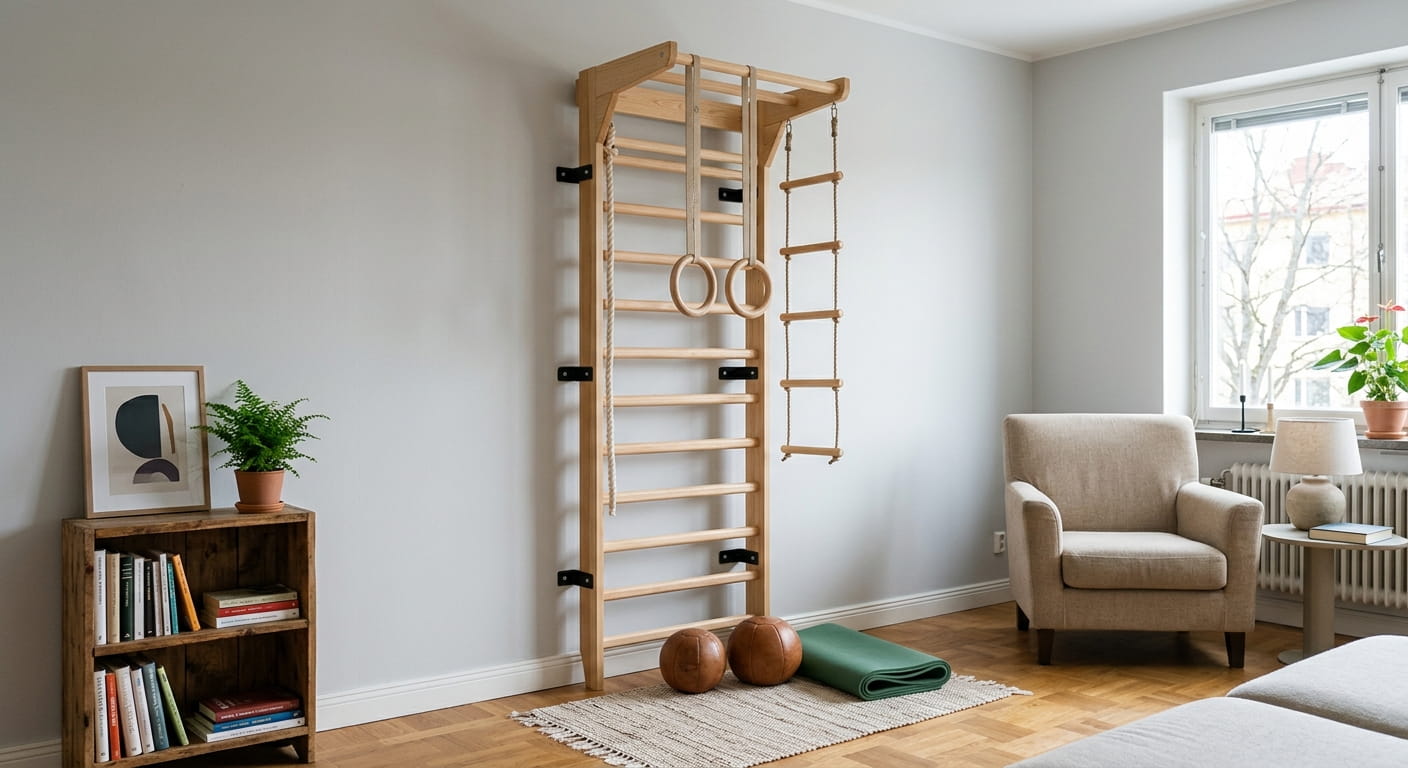
The choice boils down to something simple once you break it into three questions. First — who will train and how often: one adult, a child, the whole family or a group at a club. Second — which wall or ceiling is available for mounting, and whether the room suits anchor mounting or only pressure mounting. Third — whether the strength part of training is needed right now, or whether basic stretching and hanging will do, with the option to add attachments later. Answers to these three questions almost always point straight to a specific model from the line-up, without long hesitation between similar options.
Expert opinion
Gymnastic wall bars remain one of the few pieces of sports apparatus where a simple wooden structure with no electronics or moving mechanisms covers several tasks at once — from children's stretching to rehabilitation after injury. The secret is not the novelty of the solution but the right choice of material and model for a specific load: beech and ash on the rungs, glued timber on the uprights, and then a choice between a compact home frame and a reinforced sectional model for a gym.
When choosing, it is worth counting first not the price but the mounting type and the real intensity of use. A mistake on these two points — a pressure mount on a thin ceiling, or an entry-level model under group sectional load — costs more than the difference between models at the outset. If in doubt, it is better to check with a manager before ordering than to redo the installation after delivery.
— Veronika Tarasevich, internet marketer, specialist in semantics and content for product niches.