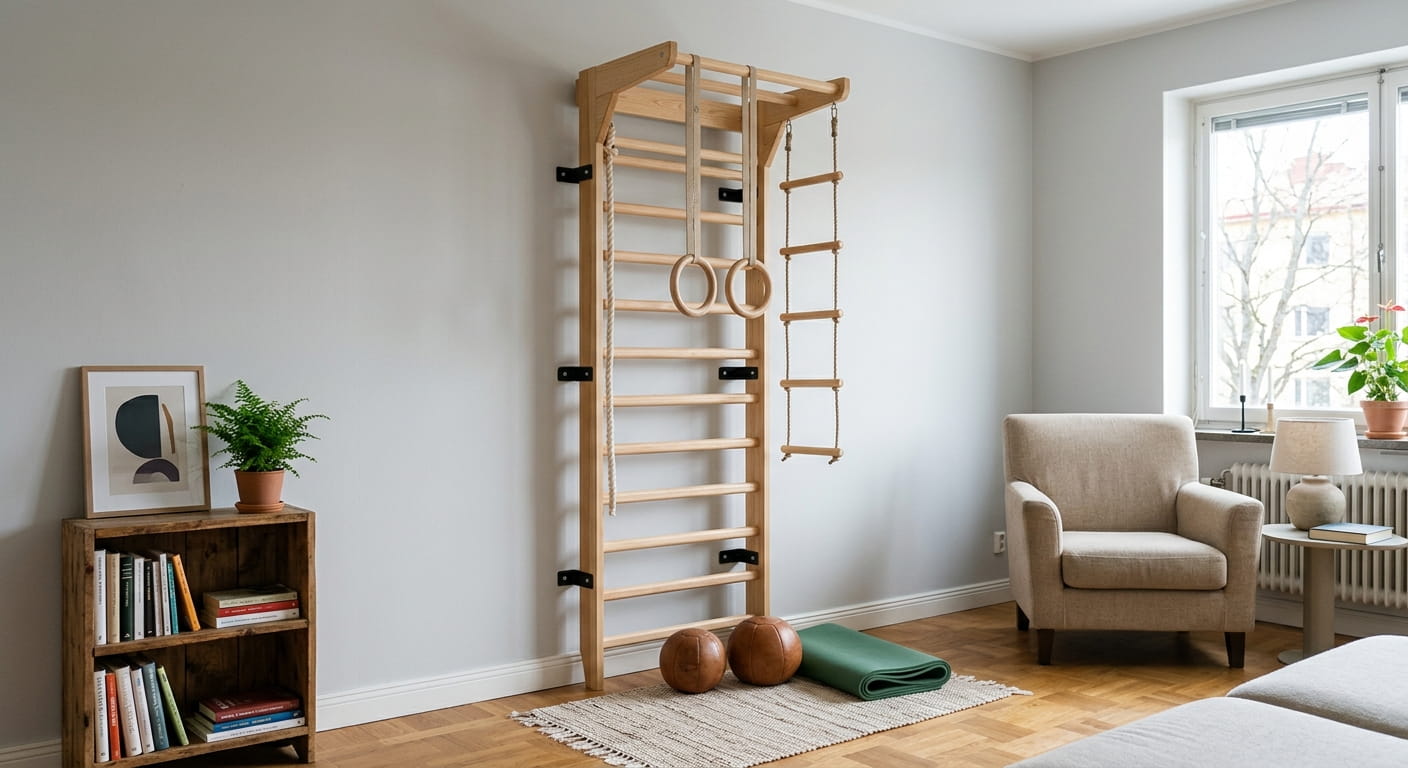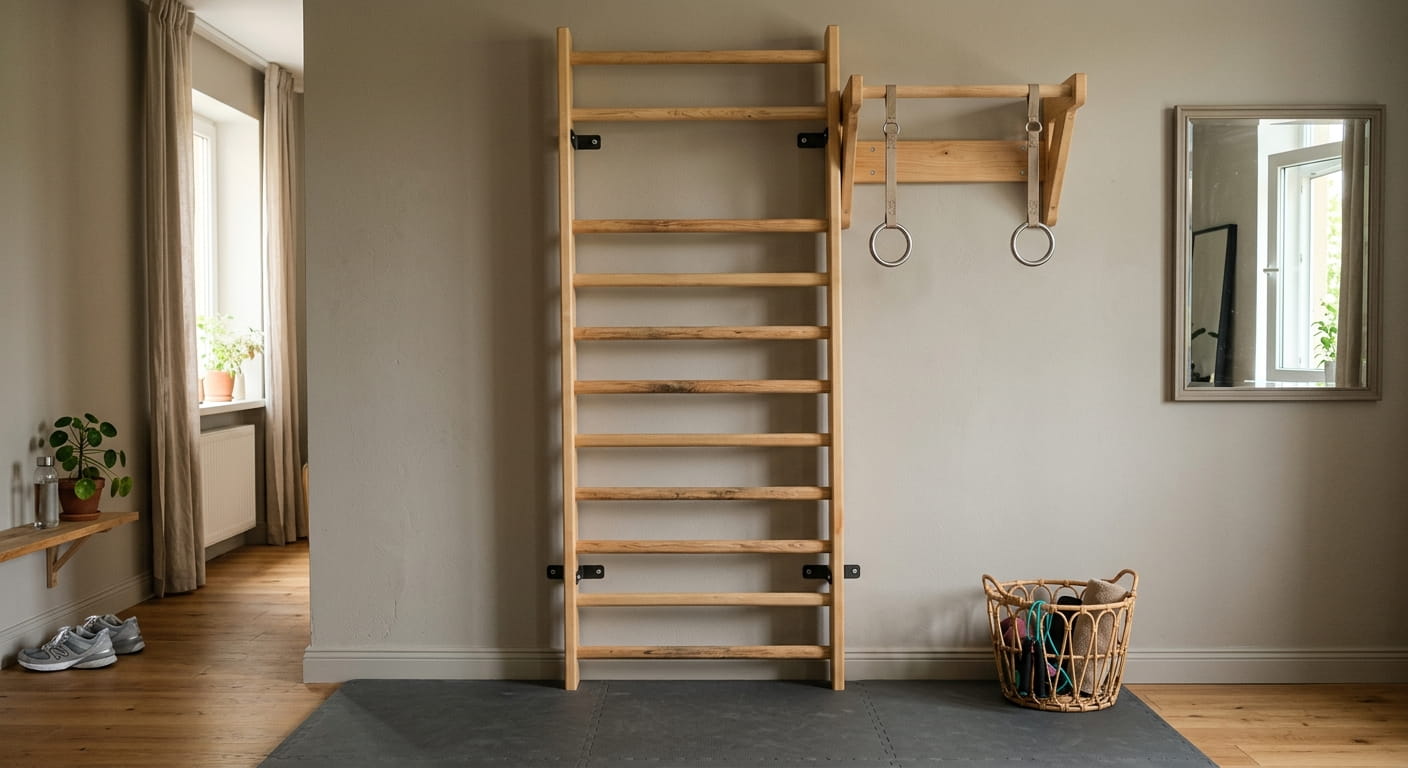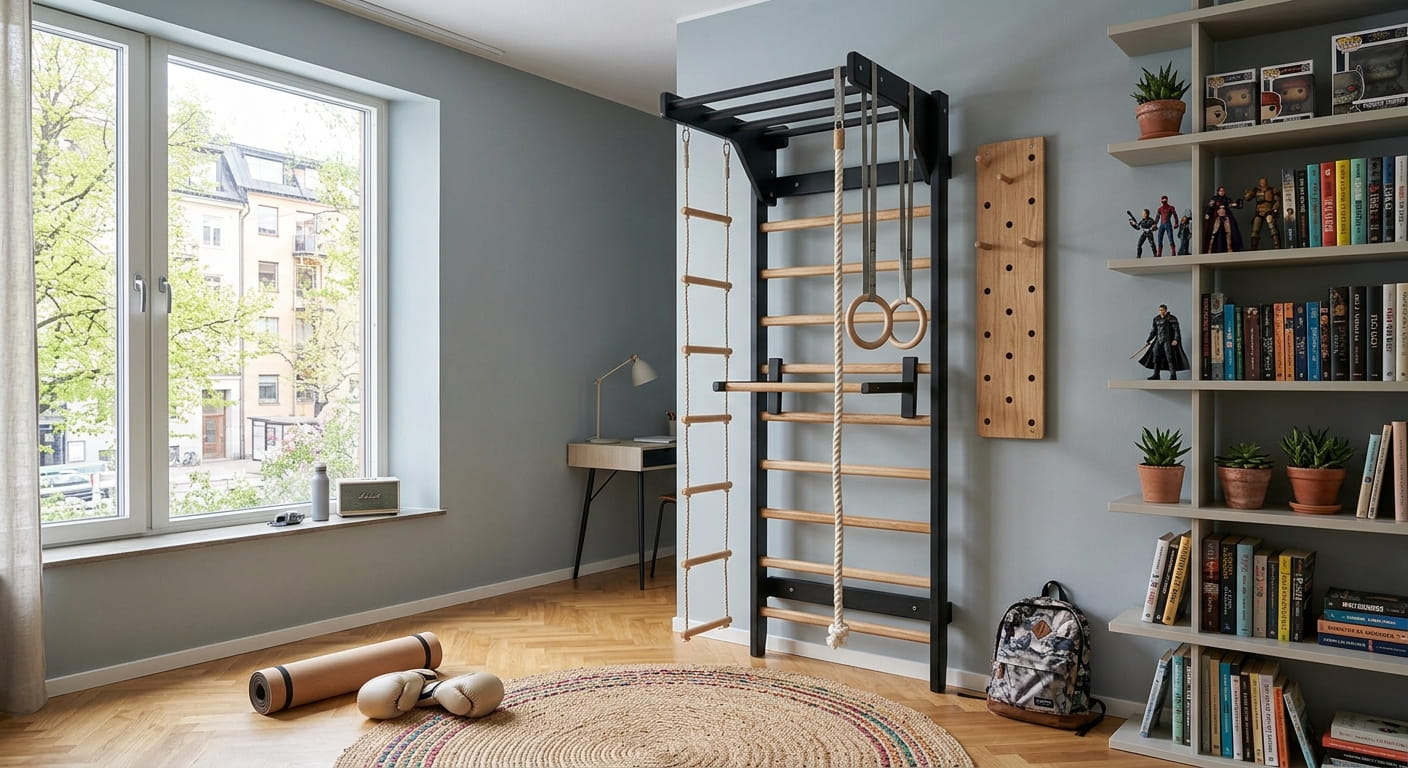
After eight hours at a monitor your back aches the same whether you're a programmer or an accountant — and a pull-up bar wedged in a doorway won't save you. Wall bars for adults are a separate category of equipment: reinforced uprights, a pull-up bar set out for a proper grip, and mounting with a safety margin. Below we'll cover how such a unit differs from a children's one, which model holds 250 kg, which mounting to choose, and how to match the size to your height and ceiling.
Wall bars for adults: when the children's version won't do
A children's sports complex and wall bars for adults look alike — vertical uprights, horizontal rungs — but they are engineered differently. A child weighing 25–35 kg puts a completely different load on the fixings than a man close to 90 kg doing explosive pull-ups or hanging with a weight on his belt. Hence the difference in upright thickness, rung cross-section, and the way it attaches to the wall.
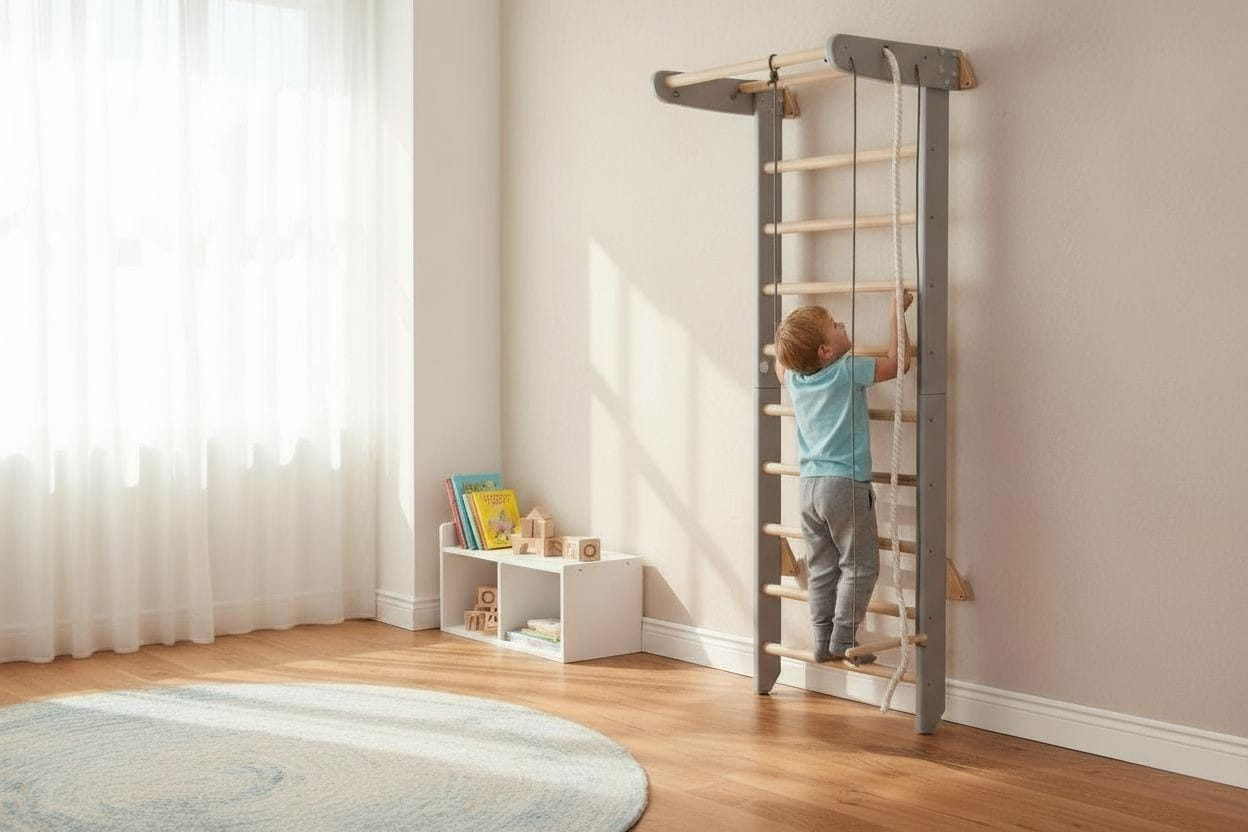
If a children's ladder is already up in the flat and the parents decide to train on it too, within a couple of months the fixings start to wobble, the joints creak, and play appears where the rung meets the upright. The structure isn't built for that kind of use, and the manufacturer says so honestly: children's and adult equipment are different products, even if they look similar.

A distinct group of buyers are people with desk jobs who came not for sporting records but for basic spinal relief. A weightless hang on the bar, a light back stretch in the evening, ten minutes instead of scrolling a phone — that's often enough to ease the morning stiffness in the lower back. Rehabilitation doctors make such recommendations all the time; the only question is what to hang from — a doorway bar clearly isn't suited to it, offering neither grip width nor stability.
If your back troubles you chronically — a hernia, a protrusion, a past injury — see a doctor first and discuss exactly which movements on the bars are allowed. The manufacturer builds reliable equipment, but the load program should be set by a specialist, not by a product manual.
By the observations of the managers who take orders, adult buyers split roughly evenly into two groups. The first: those who once did sport, gave it up because of the office and family, and now want to get back in shape without a gym membership. The second: those who never really went in for sport but are fed up with the constant heaviness in the lower back by Friday evening. The same wall bars for adults suit both groups; only the load program will differ from day one.
There's a third, less obvious scenario too — a household where one adult does strength training while another uses the same frame only for a morning stretch. Here it's important to plan the load by the heaviest user, not the average: if the husband weighs 95 kg and works with added weight while the wife only hangs weightless, the calculation is still done for the husband.
The "Atlet" model — wall bars for adults up to 250 kg
If the goal isn't spinal relief but full strength training, the conversation turns to the "Atlet". This is the reinforced model of the range: thick laminated uprights, beech rungs, combined mounting and a stated load of up to 250 kg — with a margin that withstands not only the athlete's own weight but also the explosive dynamics of pull-ups, muscle-ups, and work with added weight. Retail price from $202, and dip bars and an abs bench are already in the kit.
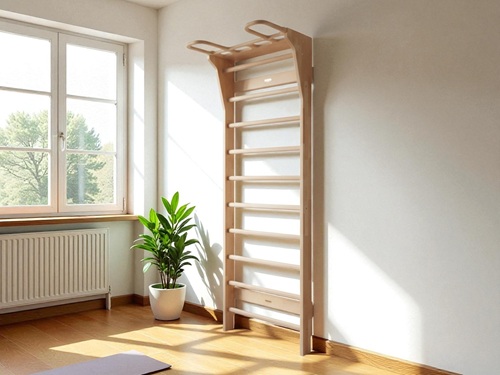
250 kg is not the "point at which it breaks" but a rated limit with a safety margin. In practice the model works without trouble under men over a hundred kilograms who train with plates and a weight belt on a regular basis.
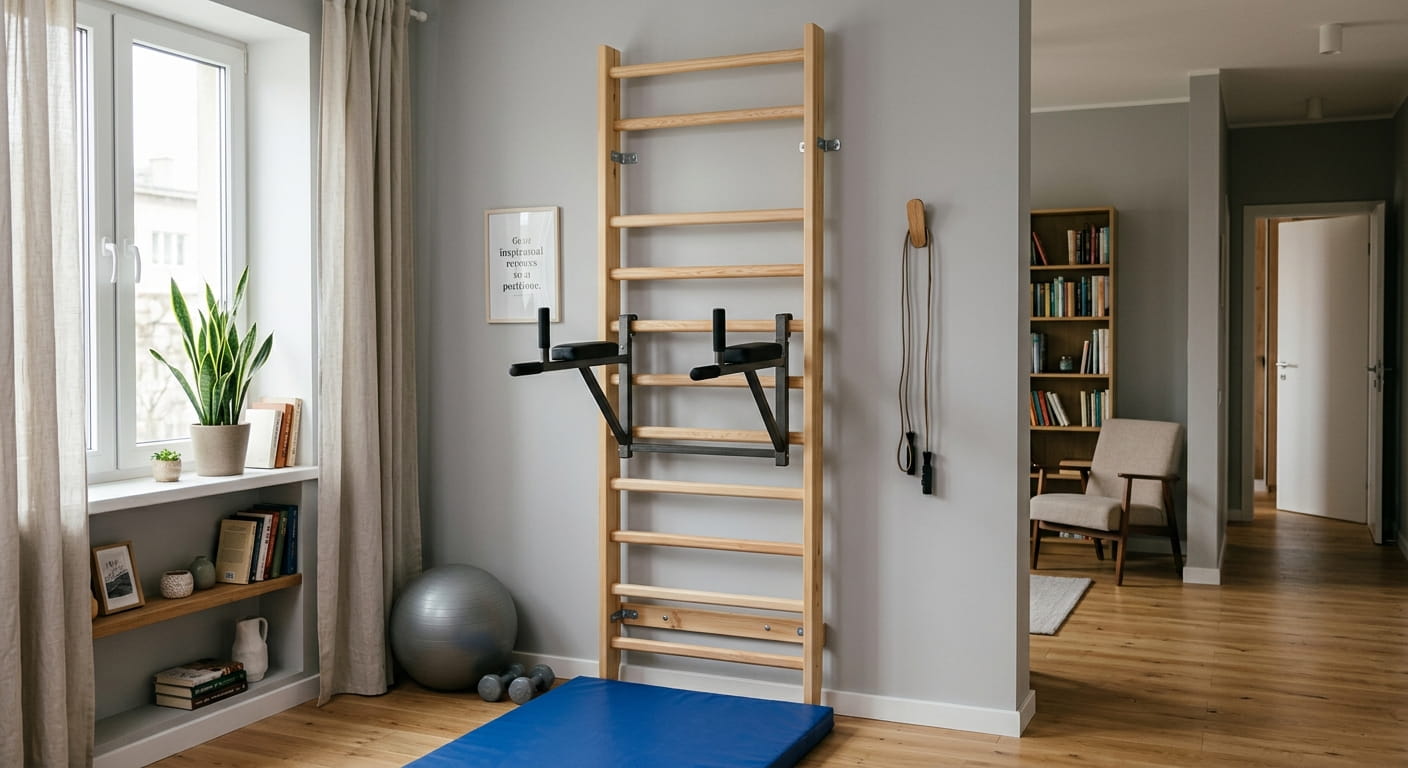
The "Atlet" differs from the base models the moment you touch it: the uprights are visibly thicker, the rung doesn't flex under weight, and the pull-up bar is set out so your hands don't hit the wall on a wide grip. It's this margin that positions the model as wall bars for adults with serious strength goals, rather than a compromise "for both child and parent".
The base kit includes hanging dip bars and a folding abs bench — so the buyer immediately gets three training zones on one frame: rungs for pull-ups and climbing, dip bars for dips and muscle-ups, and a bench for working the abs and stretching the lower back. You don't need to buy anything extra for a starter set of exercises — except perhaps rings or a rope if you want to widen the program later.
It's worth noting the geometry separately: the spacing between rungs on the "Atlet" is calculated the same as in the rest of the range, but the cross-section of the rungs and uprights themselves is larger. The difference isn't always obvious in a photo, but on direct contact with the wood you feel it at once: the rung doesn't flex, the upright doesn't vibrate on a sharp movement.
Thick laminated uprights and beech rungs — what wall bars for adults are made of
The uprights are made of laminated timber — pine or birch. Gluing several lamellas along the grain gives the wood stability: solid timber of that cross-section would warp over time with humidity swings, whereas laminated timber holds its geometry for years. For reinforced models the upright cross-section is taken noticeably thicker than in the base range — and that is the main strength reserve of the whole structure.
The rungs are beech or ash — dense hardwood that doesn't crumble or dent under the grip. Soft pine won't do for a rung: after six months of active pull-ups it shows finger dents and the surface turns rough. Beech keeps its shape and stays smooth under constant contact with the palms.
The fasteners are hidden metal — furniture fixings inside the uprights. Not a single screw or bracket shows on the outside: the joints are hidden in the body of the wood, and the load is carried by metal rather than by the wood fibres at the joint.
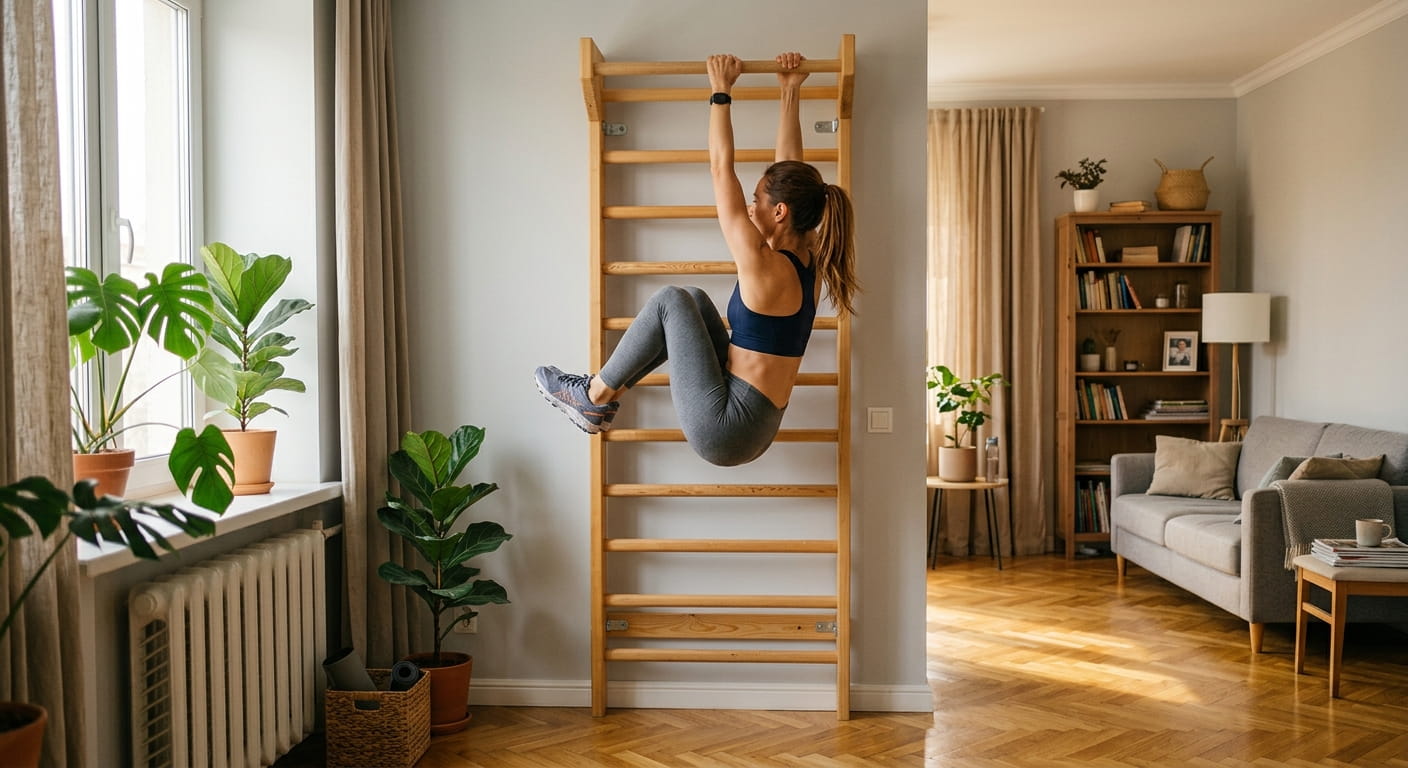
The finish is water-based lacquers and oils, hypoallergenic and certified. For an adult who rubs the rung with their palms many times per set, this is no minor detail: a cheap lacquer starts to feel sticky with sweat, whereas a water-based oil impregnation stays dry to the touch and doesn't smell of chemicals even in the first weeks after assembly.
An in-house workshop in Zaslavl, Minsk District, makes it possible to control every stage — from drying the timber to the final finish. This isn't an abstract "full-cycle production" but a concrete address: Stroitelnaya ulitsa, 7, from where the finished goods ship across all of Belarus.
A wide, set-out pull-up bar for an adult home gym corner
Adults' main complaint about budget models is a narrow pull-up bar flush with the wall. Doing wide-grip pull-ups when your hands almost touch the wall is awkward and unsafe: the elbows catch, the range is clipped. That's why in adult models the bar is either wider or set forward from the plane of the uprights — so the grip matches shoulder width rather than being limited by the structure.
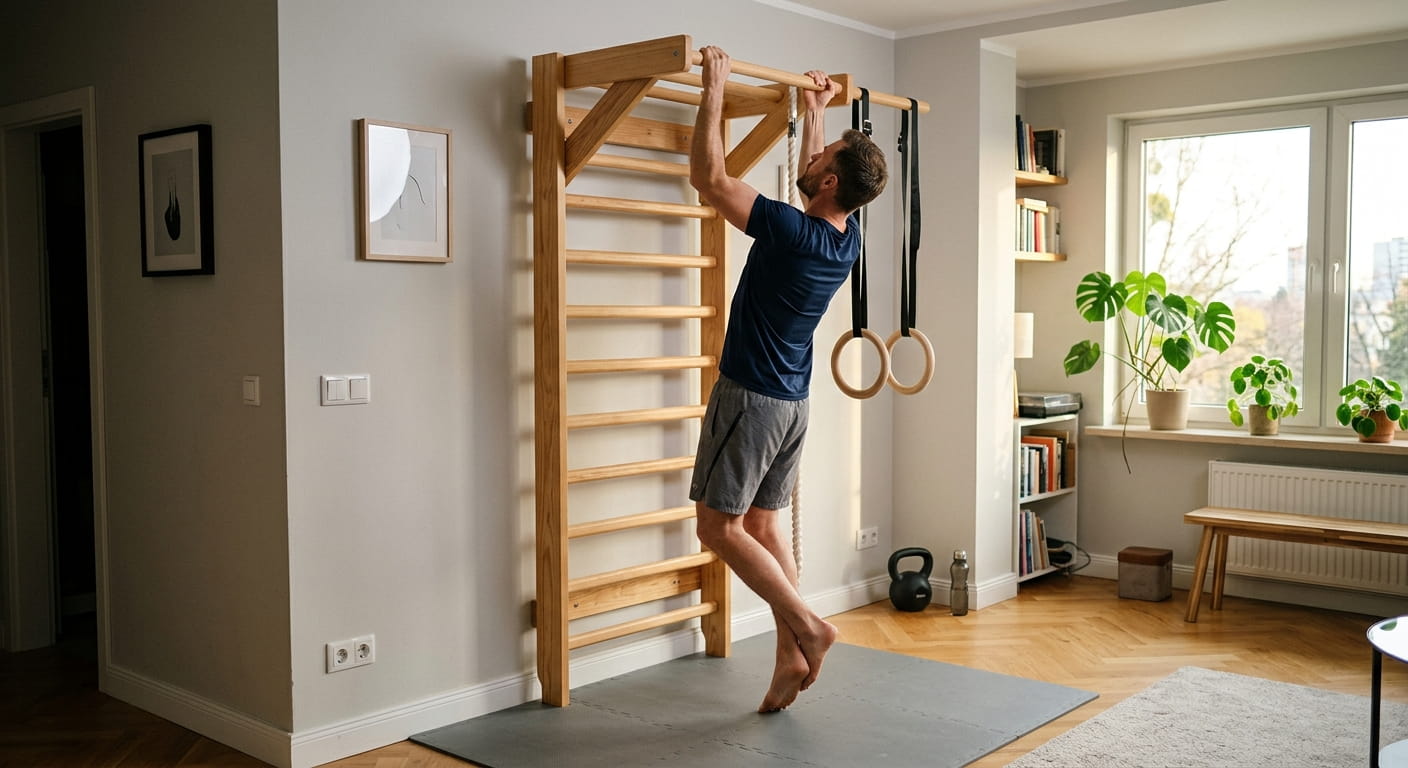
There's also a separate "Vershina" model — an I-shaped structure with the bar integrated right into the top of the uprights, from $187. It's a compact solution for those who need just a bar plus a minimal set of rungs, with no dip bars and no bench. The "Moy Turnik", meanwhile, is a specialized story: a removable adjustable pull-up bar with different grips, built for working the upper body, from $218.
Setting the bar forward also solves a second problem — during a muscle-up or toes-to-bar the torso doesn't catch the uprights or the lower ladder rungs. A small thing that, in practice, decides whether training on the equipment is comfortable or not.
Grip and range: why setting the bar out matters
An adult's shoulder width isn't abstract but quite concrete: for a man of average build, the distance between the hands on a wide grip easily exceeds half a metre. If the bar sits flush with the wall and the uprights of the wall bars for adults are too close together, the hands either catch the uprights or the grip is artificially narrowed — and that's already a different exercise with a different load on the muscles.
- Wide overhand grip — emphasis on the lats, needs room to the sides of the hands.
- Narrow underhand grip — emphasis on the biceps and lower lats, requires free space below the chest.
- Neutral grip — parallel hands, reduces load on the shoulder joints, in demand during rehabilitation.
- Hang with a torso turn — used in stretching, requires clearance between the body and the ladder rungs.
Setting the bar forward from the plane of the uprights solves all four points at once: the hands have room on any grip, and the torso doesn't catch the lower rungs when turning. For an above-average-height adult user this is especially noticeable — the longer the arms, the wider the natural grip on pull-ups, and the more important the bar width margin on the chosen wall bars for adults.
In essence, a set-out bar is exactly what distinguishes adult sports equipment from a compact children's ladder-wall: a child simply doesn't need a grip-width margin, whereas an adult with strength goals finds it critical from the very first session.
Combined mounting: how wall bars for adults stay on the wall
Mounting is essentially the main question when choosing wall bars for adults, because it's the mounting — not the upright thickness by itself — that determines the allowable load. There are three schemes.
- Wall-mounted, a.k.a. anchored — the uprights fix through to the wall with anchors into concrete or full-body brick. The most rigid option, maximum reliability under dynamic load. It can't be set into plasterboard or hollow block — the wall simply won't hold the anchor.
- Pressure-mounted — the structure braces between floor and ceiling, with no wall drilling. Suits rented housing and thin partitions, but needs a ceiling height of 2.40 to 3.10 m and an ordinary solid ceiling — it can't go under a stretch or suspended one, as the brace would push through the covering.
- Combined — a union of the wall-mounted and pressure-mounted nodes in one structure. This is exactly the mounting used in the top models, including the "Atlet": the rigidity of anchoring plus an extra point of support that damps sway on explosive movements.
| Mounting type | Where it mounts | Feature |
|---|---|---|
| Wall-mounted (anchored) | Concrete, full-body brick | Maximum rigidity, not for plasterboard |
| Pressure-mounted (floor-to-ceiling) | Any solid ceiling 2.40–3.10 m | No wall drilling, not under a stretch ceiling |
| Combined | Concrete/brick + support into the ceiling | Used in reinforced models, including the "Atlet" |
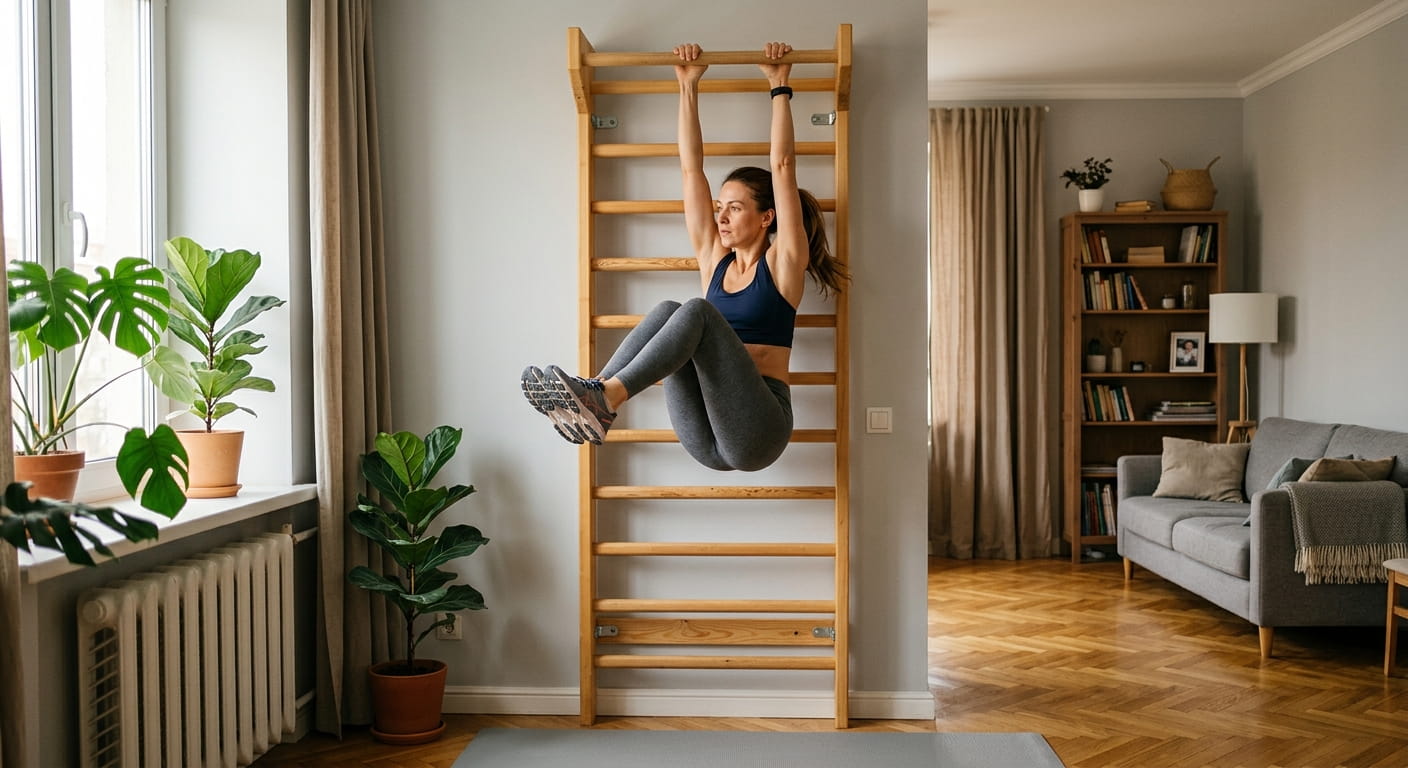
Measure the ceiling before ordering. If the height is under 2.40 m or the ceiling is a stretch one, the pressure and combined schemes physically can't be fitted — only wall mounting on anchors remains, and only given a solid wall.
For the "Vertikal" — the base I-shaped model from $183 — a rigid combined mounting is used, which makes it a surprisingly sturdy solution for the price: not the top "Atlet", but not a budget pressure solution with a limited load either.
When choosing a mounting scheme for wall bars for adults it helps to picture straight away who will train and how. A calm hang and stretching create almost no horizontal load on the mounting node, whereas sharp explosive pull-ups, swinging on the rings, or jumping off the bar are a different story altogether — and here it's not worth skimping on the mounting scheme.
Attachments for adult strength training
A bare ladder with no attachments is, at best, half the function of any wall bars for adults. An adult user's demands are broader than a child's: pull-ups, dips on the bars, abs, work with rings. All of it is added as separate attachment modules on the same frame, and it's exactly the set of attachments that distinguishes base wall bars for adults from a full home gym corner.
Removable pull-up bar
Takes off when you need to free the ladder span for climbing or stretching.
Hanging dip bars
For dips and muscle-ups — included as standard with the "Atlet".
Folding abs bench
Attaches and stows away in seconds, taking up no space when not in use.
Gymnastic rings
For adults this is no longer play but a full functional load on the shoulders and core.
Rope and rope ladder
Extra cardio load and grip — the attachments fix to the top rung.
Warranty on attachments
12 months — as on the frame itself, excluding natural wear of ropes and textile elements.
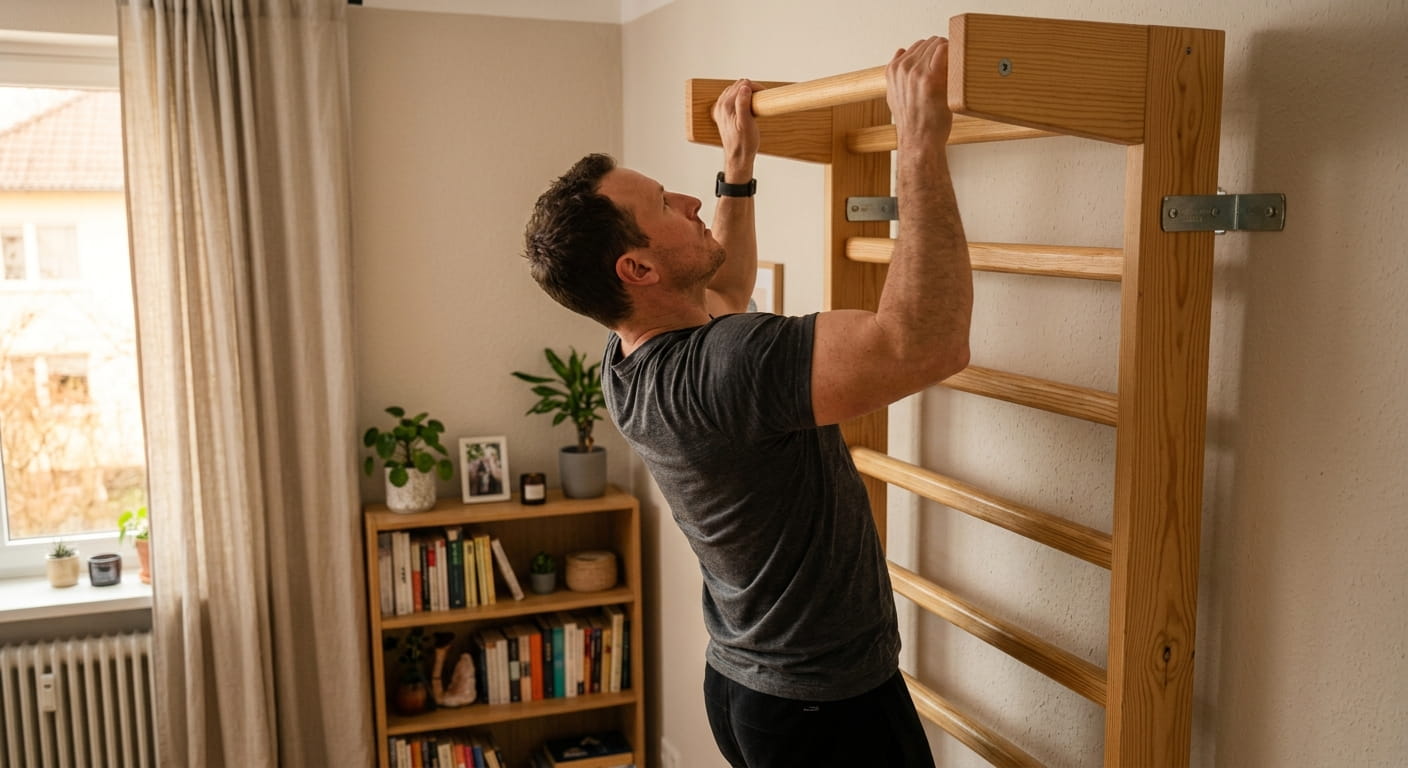
It's worth taking a closer look at the wall bars with a pull-up bar and dip bars — if the task is framed from the start as "a bar plus dip bars and nothing extra", it's more logical to take a structure with that set at once rather than buying attachments piecemeal. And for those seeking modularity and the option to add equipment later, look at the "Minsk Sport": removable adjustable attachments, from $174.
The "Lider" — a U- or T-shaped model with sections, a climbing net and monkey bars, from $195 — is an option for those who want to combine the strength and functional parts on one frame, including elements usually sought in a standalone wall bars exercise machine for the home.
It's worth a word on each module separately, because "attachments" is too broad a word hiding things that differ in meaning. A removable pull-up bar lets you fully free the ladder span when you need to climb or stretch without obstructions overhead — handy in flats where the bars stand in a walkway. Hanging dip bars mount on the uprights at the needed height and carry the load separately from the rungs, which matters during intense dips with torso swing. A folding abs bench stows in seconds and doesn't get in the way when only the bar or dip bars are in use — no need to keep removing and storing it somewhere separate.
Gymnastic rings for an adult are no longer entertainment but a full training tool: the unstable suspension brings the stabilizing muscles of the shoulders and core into play more than a static bar does. A rope and rope ladder add cardio load and grip, but require regular checks of the rope's condition — the material is textile, it abrades over time, and it's the one thing the standard warranty doesn't cover.
How to pick the size of wall bars for adults to height and ceiling
Size is no less important a parameter than mounting. Bars that are too low clip the hang range: your feet reach the floor, and a full hang with spinal traction doesn't work. Too tall, and it hits the ceiling during installation or requires a height reserve a flat simply doesn't have.
A ceiling-height range of 2.40 to 3.10 m is covered by pressure and combined mounting — the standard situation for most flats and private houses. If the ceiling is below 2.40 m, the pressure structure physically won't stand with the needed bracing, and only wall-mounted anchoring on a solid wall remains. If the ceiling is above 3.10 m, the pressure scheme doesn't fit either, because uprights of that length aren't provided for in the range, and again only wall mounting remains.
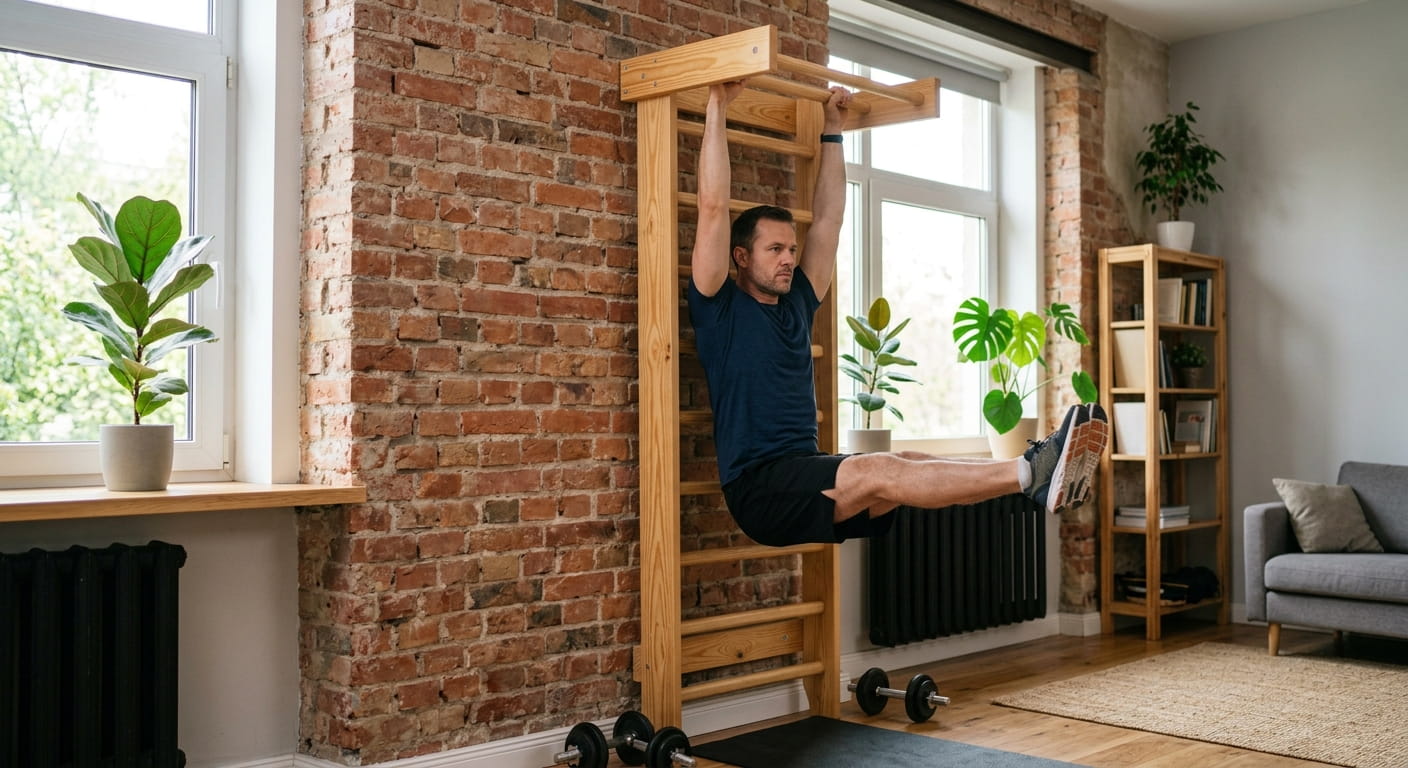
The structure takes up little room — about 0.2 square metres of floor, essentially just the depth of the uprights themselves. This lets you place the equipment even in a narrow pier between a window and a door, which is especially relevant for models like the "Krepysh" — a base I-shaped wall bars for narrow piers, from $198.
When ordering, you should state not only the ceiling height but also the main user's height — the placement of the top rung and the pull-up bar relative to the floor depends on it. The manager helps select the specific dimensions for the specific room; this is a standard part of the consultation when placing an order.
Strength training and back rehabilitation on wall bars for adults
The two use scenarios for adults are fundamentally different, and the equipment is chosen for them differently.
The first is strength work. Pull-ups with different grips, muscle-ups on the dip bars, hanging leg raises for the abs, push-ups with feet on a rung. Here the upright thickness, mounting rigidity and load reserve matter — the parameters the "Atlet" answers for, with its 250 kilograms and combined mounting.
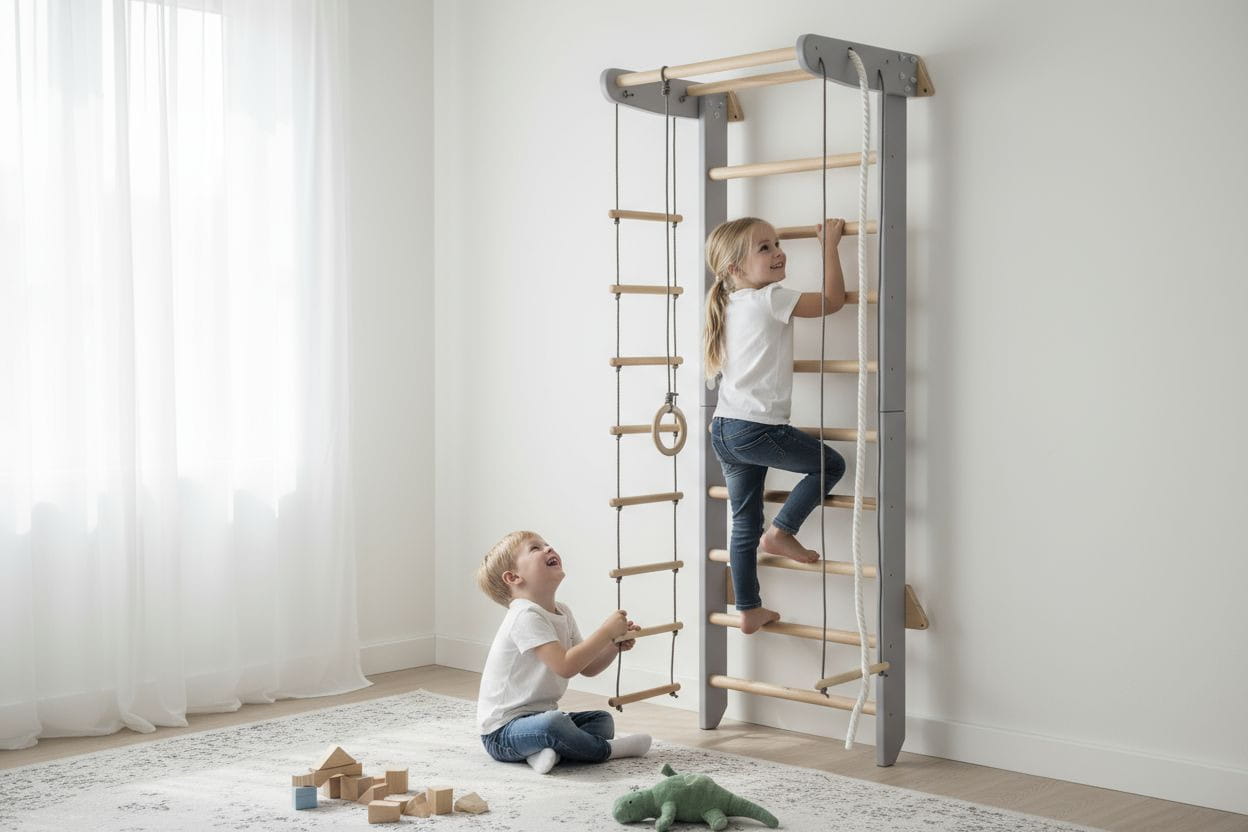
The second scenario is gentle rehabilitation and spinal relief for desk work. Here the emphasis is different: not maximum weight but a comfortable grip, stability during a static hang and a convenient rung height. A hang without swinging, a light stretch of the side muscles, careful knee raises to the chest — the set of movements recommended for constant lower-back pain from long sitting.
- A hang on straight arms for 20–40 seconds — relieves compression on the lumbar spine after a workday.
- Pull-ups with a narrow and wide grip — the base strength load for the back and shoulders.
- Folding abs bench — fixes the feet during crunches, with no slipping.
- Dips on the hanging bars — chest and triceps without a separate machine.
- Stretching on the bar — side bends in a hang, relief after the strength part.
Model comparison — which wall bars for adults will hold the load
It helps to look at the whole range at once, not just the "Atlet" — sometimes a simpler, cheaper model suits a specific task.
| Model | Type | Load | Price, $ |
|---|---|---|---|
| "Krepysh" | I-shaped, narrow piers | 120–150 kg | from 198 |
| "Vershina" | I-shaped with top bar | 120–150 kg | from 187 |
| "Vertikal" | I-shaped, combined mounting | 120–150 kg | from 183 |
| "Atlet" | Reinforced, thick uprights | up to 250 kg | from 202 |
| "Minsk Sport" | Modular, removable attachments | 120–150 kg | from 174 |
| "Lider" | U/T-shaped, sections, net, monkey bars | 120–150 kg | from 195 |
| "Moy Turnik" | Adjustable bar with grips | 120–150 kg | from 218 |
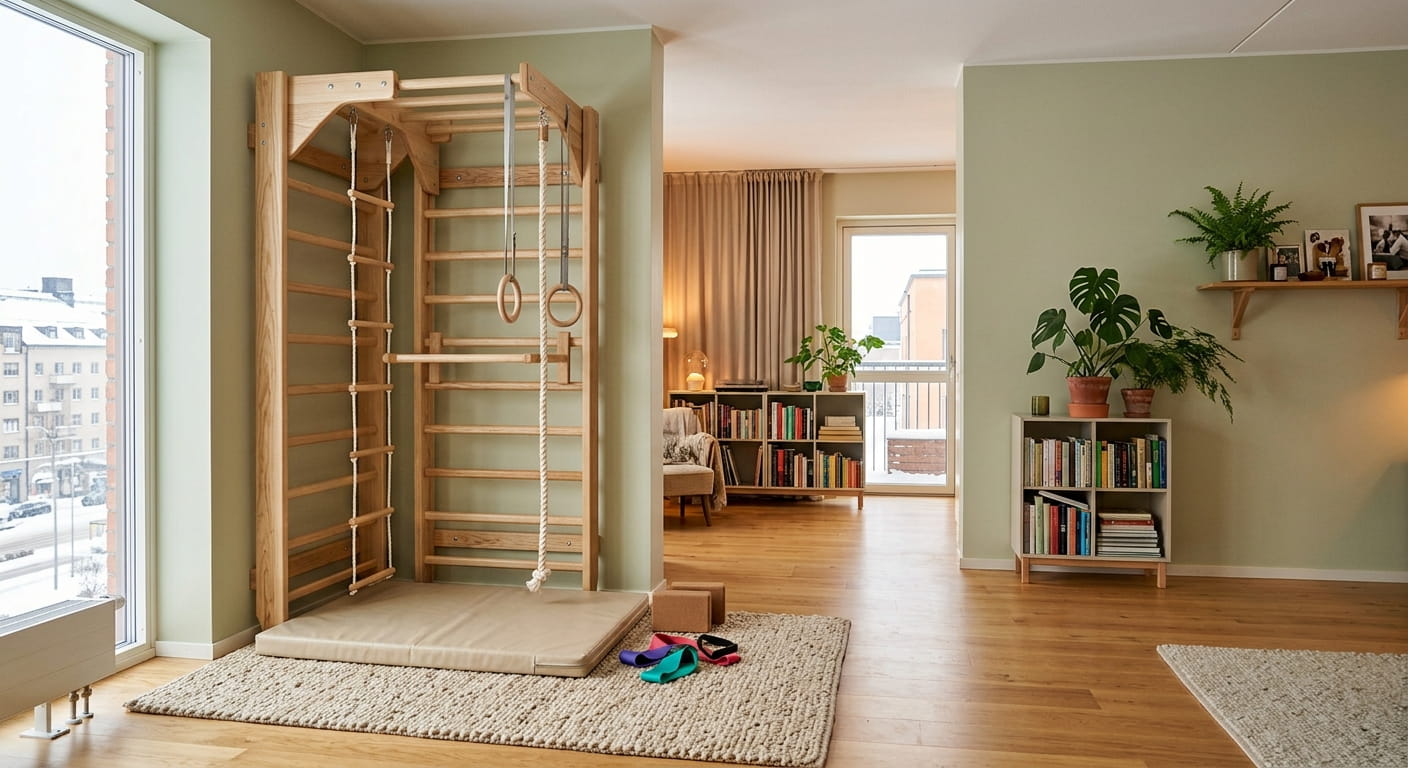
If the user's weight is above average, if strength work with added weight is on the cards, or you just want a safety margin for years ahead without recalculating the load — the logical choice is reinforced wall bars, and the "Atlet" covers most cases here. For lighter scenarios — back relief, light fitness without heavy weights — the base range is enough.
Strictly speaking, all seven models of the range are variations on one and the same idea: a wooden home gym corner built to common assembly and mounting principles, but with different accents. One set of wall bars for adults is made for a narrow pier, another for an integrated bar, a third for maximum load. The buyer's task is to understand their own scenario rather than trying to guess a "universal" model, which simply doesn't exist in this range.
Checking the fasteners and caring for wall bars for adults
Wood and metal under regular dynamic load need attention, and this isn't a one-off after installation but a habit for the whole service life of the equipment.
Once every three to six months you should go over all the bolted joints — tightening what's worked a little loose. The dynamic load from pull-ups and explosive movements gradually loosens the thread, and slight play noticed in time is fixed in five minutes with a wrench. That same play, left unattended for a year, turns into a rickety structure.
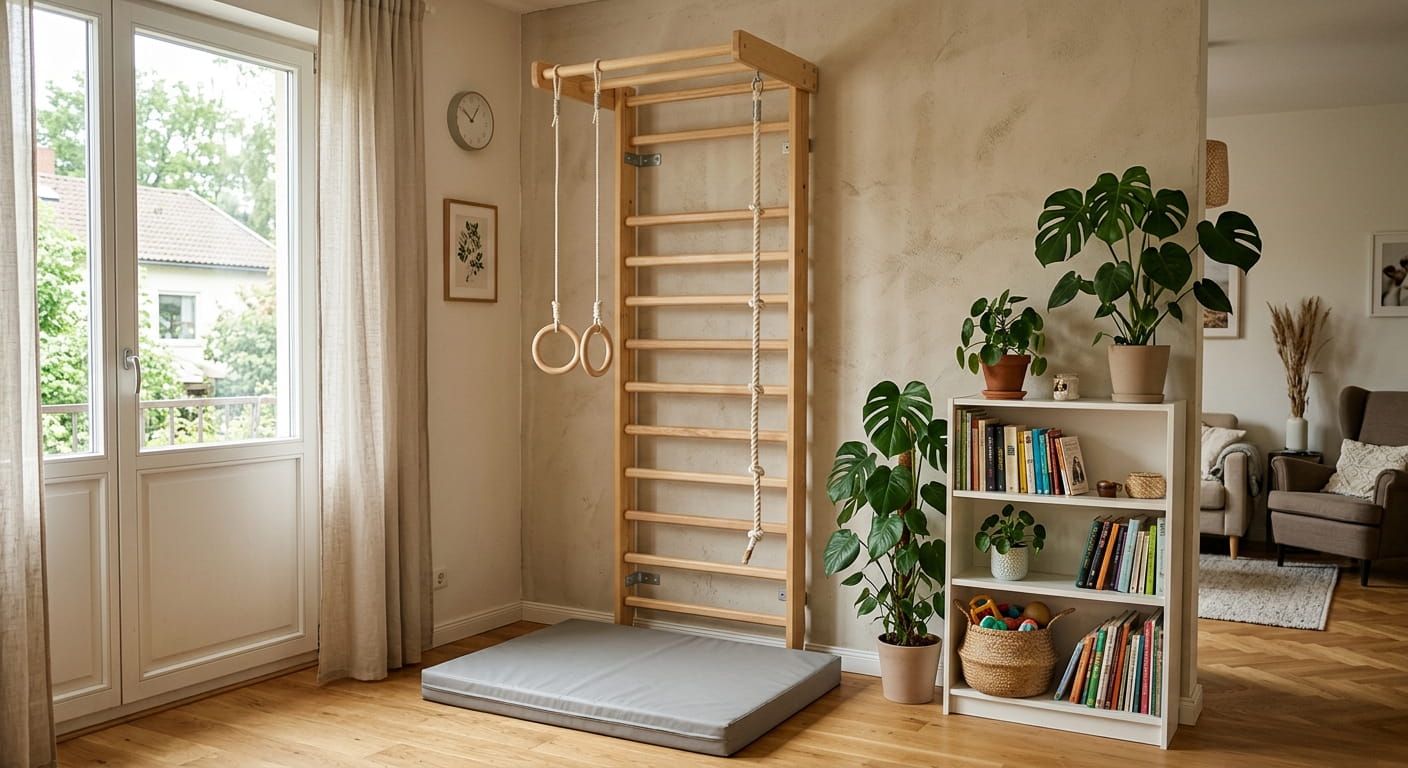
- Wipe with a dry or slightly damp cloth, without abrasives or solvents.
- Tighten the bolted joints every 3–6 months, especially with active strength training.
- Lay a mat under the equipment — both for cushioning on landing and to protect the floor covering.
- Don't install next to a radiator or keep it in direct sunlight — that dries the wood unevenly.
The warranty on the structure is 12 months and covers the attachments too, except for natural wear of rope and textile elements such as the climbing rope or ladder — these are consumables that abrade with use regardless of build quality.
Indoor humidity also affects the wood's lifespan, though people rarely think of it in advance. Sharp swings — say, the bars stand near a kitchen where steam cooking is frequent, or in a room with a window open in winter — gradually loosen the lamella glue in the uprights. The water-based finish doesn't harm the wood in itself, but neither does it save it from systematic humidity swings year after year. Even room humidity without extremes is the best you can give the equipment with no special effort.
Regular tightness checks aren't a formality for show but the only way to keep the stated load capacity for the whole service life of wall bars for adults. The metal in the hidden fasteners won't let you down, provided the thread is tightened in time.
Warranty, assembly and delivery
Assembly takes from one and a half to three hours — the kit includes instructions and all the fasteners, with nothing extra to buy. For someone without much furniture-assembly experience this is a realistic evening, not a weekend with a drill and swearing.
Delivery runs across all of Belarus — from Zaslavl, where the workshop is, to any region. For those seeking equipment for a specific sporting task with no extra compromises, the sport wall bars with a reinforced configuration deserve separate attention — by the logic of configuration and load they overlap with the same range as the "Atlet".
For wholesale buyers — a minimum batch from 10 units, with private-label (own trademark) development possible; the products are certified to TR CU. Production takes 15–35 working days, shipping of the finished order 3–5 days, delivery to the transport company terminal is free, and pickup from the warehouse in Zaslavl is also available. For a retail buyer ordering a single set of wall bars for adults, all these timelines are noticeably shorter — confirmed individually when placing the request.
How to choose wall bars for adults by goals and weight
To put it briefly — you should start from three parameters: the user's weight, the training goal and the type of walls in the room.
| Task | Recommended model | Why |
|---|---|---|
| Strength training, above-average weight | "Atlet" | Up to 250 kg, thick uprights, combined mounting |
| Back relief for desk work | "Vertikal" or "Krepysh" | Rigid mounting, enough for a light hang and stretching |
| Emphasis on upper body and grip | "Moy Turnik" | Adjustable removable bar with different grips |
| Rented housing, thin walls | "Minsk Sport" | Modular build, pressure mounting with no wall drilling |
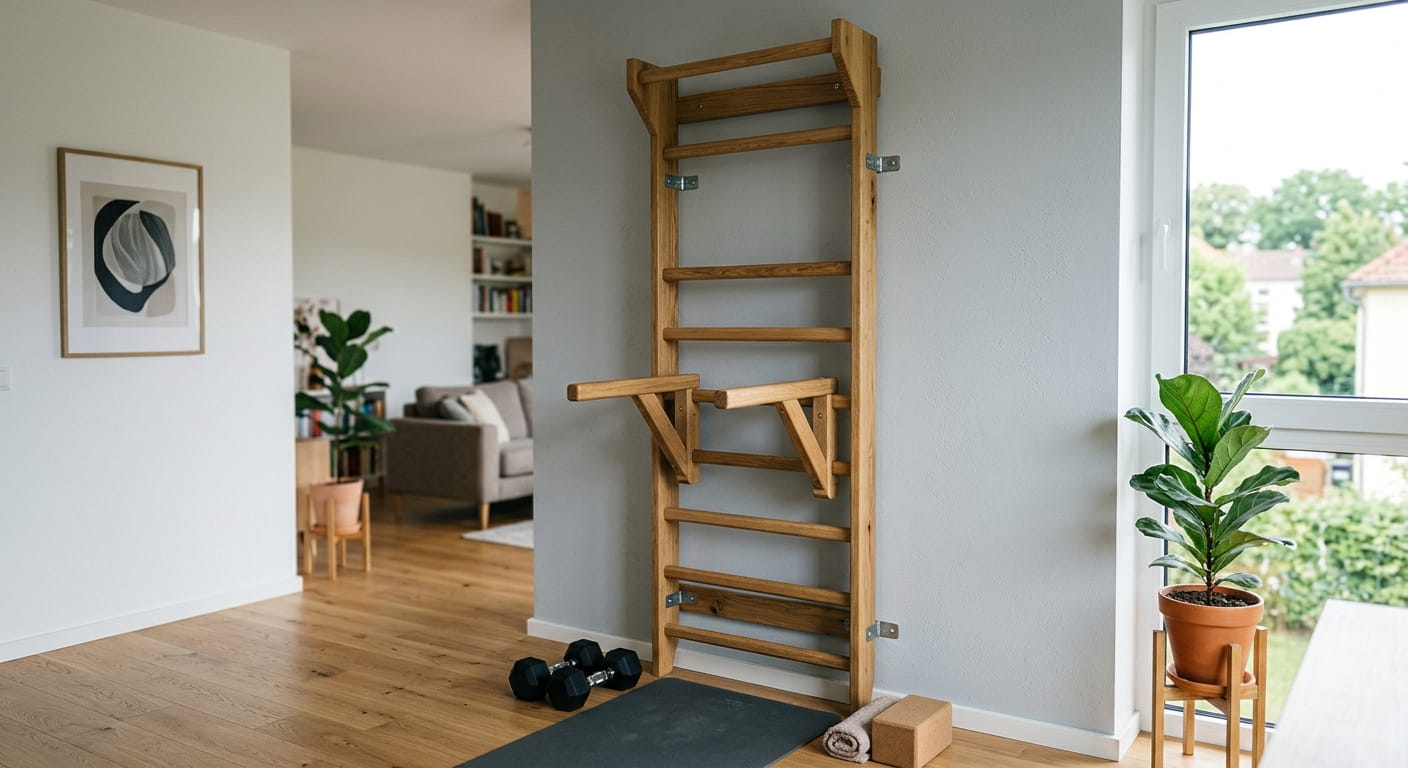
If the user's weight approaches the hundred-kilogram mark or strength work with added weight is planned, the extra cost of a reinforced model pays off in peace of mind: no need to wonder every time whether the mounting will hold the next jerk. If the task is gentler — back relief, a light evening stretch — the base range copes without trouble and costs less.
A separate point is a user taller than 185–190 cm. For such cases it's important to confirm with the manager the placement of the top rung and the pull-up bar: the standard layout sometimes needs adjusting so that a hang on straight arms doesn't leave the feet on the floor.
Who wall bars for adults are right for
If you put the buyer's portrait briefly, it comes out roughly like this: someone who either already did sport and wants to get back in shape at home, or sits eight hours a day and is looking for a way to ease tension in the back without a trip to the gym. For both scenarios, wall bars for adults close the task better than a compact doorway bar or a rubber expander on its own.
- Men and women from 80 kg with strength goals — the reinforced "Atlet" wall bars with a margin up to 250 kg.
- Office workers with lower-back pain — a base rigid model for a light hang and stretching without impact load.
- Families with a weight difference between adult users — calculation by the maximum load, not the average.
- Those renting a flat — pressure mounting with no wall drilling, and the option to dismantle when moving.
A word, too, about those who once tried training on a children's ladder "to keep the kid company" — and grew disappointed in the very idea of a home pull-up bar. The problem was almost always not the idea but the fact that the equipment wasn't rated for adult loads. Properly chosen wall bars for adults remove this question entirely: the structure is engineered from the start for a different weight and a different movement dynamic.
Another practical point concerns sharing with other family members. If the bars are set up not only for an adult but are also used now and then by children, it's worth looking at models that allow extra children's equipment to be hung separately, without loading the main frame beyond its rated scheme. The manufacturer makes such combined configurations too; the matter is discussed individually at order time.
Common mistakes when choosing wall bars for adults
The first and most common: buying a children's model "to grow into", thinking to save money, and a year later buying an adult one separately. The saving turns out to be false: a children's structure simply wasn't designed for adult loads, and premature wear of the fasteners is a matter of months, not years.
The second mistake: pressure mounting under a stretch ceiling. Fitters physically can't brace against the covering without risking pushing it through, and moving the install to a solid ceiling sometimes means dismantling part of the refurbishment. This point needs checking before ordering, not after delivery.

The third: ignoring grip width. A narrow bar seems a trifle when choosing wall bars for adults by photo, but with regular pull-ups it becomes a source of discomfort in the shoulders and elbows. For an adult with a full strength program the bar should be either wide or set forward from the uprights.
The fourth: buying without accounting for a second user's weight. If both husband and wife with a substantial weight difference will use the bars, the load must be calculated by the maximum value, not the average.
The fifth mistake: skimping on measuring before ordering. It seems "by eye" is enough, but a difference of a few centimetres between the real ceiling height and the one stated in the order sometimes means the pressure scheme just won't stand with the needed tension. Five minutes with a tape measure before calling the manager saves both the fitters' time and the nerves of re-agreeing the dimensions.
The bottom line on choosing
Wall bars for adults are not a "one size fits all" product but a constructor of several parameters: load, mounting type, bar width, the set of attachments. The "Atlet" covers the top of the strength bar, the base range the lighter scenarios at a reasonable price. The right choice saves both money and nerves a year into use.
A gym corner for an adult, assembled with all these details in mind, serves for years without a single complaint about the fasteners — and that, rather than a pretty picture in the interior, is the ultimate goal of the whole undertaking.
To sum up everything above briefly: wall bars for adults are equipment where the upright thickness, the wood species of the rungs and the mounting scheme are matched to the real weight and the real task, not taken "by eye" from a catalogue photo. That's exactly why the manufacturer has a separate reinforced "Atlet" model, rather than one averaged set of wall bars for every occasion.
Expert opinion
Over the years of production one thing is clear: adult buyers most often underestimate the difference between children's and adult equipment, going by appearance alone. In reality it's the upright thickness, the wood type of the rungs and the mounting scheme that decide whether the structure lasts three years with loose fasteners or fifteen years without a single complaint. The "Atlet", with its 250-kilogram margin and combined mounting, covers almost any strength-load scenario, but the base models with rigid mounting honestly earn their price too, if the task is gentle back relief rather than heavy strength training.
A tip for first-time buyers: don't skimp on measuring the ceiling and assessing the walls — that's the one step you can't replay after delivery. Everything else, including the set of attachments, can be bought and fine-tuned after the frame is in place.
— Veronika Tarasevich, internet marketer, specialist in semantics and content for product niches.